by C. Davis
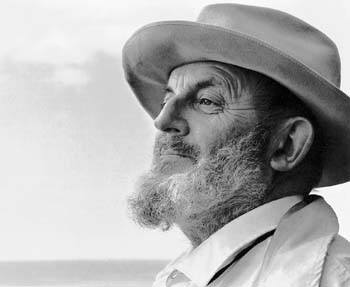
Ansel Adams is most widely known throughout the world of photography for his accurate and pristine views of nature. Adams described himself in three ways: a photographer, a lecturer, and a writer. By combining these three qualities, Ansel Adams has been easily referred to as a communicator.
Born in 1902, Adams photographic vision was born as he spent his childhood growing up in the natural beauty of San Francisco, California. As a quiet and introverted boy, Adams typically ventured into the areas surrounding Golden Gate where he observed and enjoyed the simplicities of nature. Ansel Adams’ true passion for nature photography originated from the area of Yosemite Sierra, where he spent a great amount of time from 1916 until the time of his death in 1984.
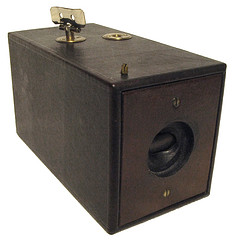
With his first camera, the Kodak No. 1 Box Brownie that was given to him by his parents, Adams explored and captured the beauty of nature. In 1930 Adams met photographer Paul Strand, whose images had a significant impact on Adams photographic interests. It was Strands’ images that transitioned Adams from his 1920’s pictorial style of photography to that of straight photography. Straight photography attempts to depict a scene as realistically, non-manipulated and objectively as permitted my a medium.
Adams eventually would become straight photography’s most recognized and appreciated photographer. What benefited Adams’ photography the most was his drive and desire to travel extensively in pursuit of both the natural beauty he photographed and the receptive audiences he required. A connection between Ansel Adams photographs and the topic of beauty of nature was rapidly established.
While Ansel Adams is most known for his immaculate nature photography, he is also recognized for producing spectacular blackand white images. His black and white photography helped bring awareness to the strength and emotion of a specific moment captured without color. While many believe color defines an image of time, Adams exhibited that a black and white image can say just as much, if not more.
One image that stands out that he created in 1938 was “Half Dome, Merced River, Winter”, one of Adams’ most beloved photographs of Yosemite Valley. He took the photograph with an 8″x10″ view camera from the Old Sentinel Bridge near the Yosemite Chapel. This picture sums up his style perfectly with the focal point of immense snow covered mountains, stately trees and a tranquil river flowing through middle of the image.
Few photographers have been able to create the lasting impression as strong as that of Ansel Adams. Adams combined two very powerful facets, his love for nature and the simplicity and depth of black and white photography. Adams created images that will forever be ingrained in the minds of those who appreciate photography as well as anyone inspired by nature and the environment.
 Columbia news, views & reviews