ARE WE REALLY IN A FIX?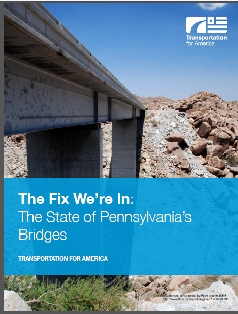
This report identifies that our roads, highways and bridges “have increasingly received failing scores on maintenance and upkeep”. The American Society of Civil Engineers has rated our country’s overall infrastructure a ‘D’ and our bridges a ‘C.’ For roads and highways, this manifests itself in rutted roadways, cracked pavement and abundant potholes, creating significant costs for drivers and businesses due to increased wear and tear on their vehicles. For the nation’s bridges, lack of maintenance can result in the sudden closure of a critical transportation link or, far worse, a collapse that results in lost lives and a significant loss in regional economic productivity.
“Out of 50 states and the District of Columbia, Pennsylvania ranks 1st nationally in terms of the overall condition of the state’s bridges. (1 being the worst, 51 being the best.) Today, one out of every four bridges that motorists in Pennsylvania cross each day are likely to be deteriorating to some degree; and 26.5 percent of bridges statewide are rated ‘structurally deficient’ according to government standards, compared to 11.5 percent nationwide. As of 2010, Pennsylvania had 22,271 highway bridges: 15,145 of them owned by the state; 6,019 owned by local counties, cities and towns; and 1,107 owned by other entities, such as private business and federal agencies. Ownership of a particular bridge matters because it often determines which jurisdiction is responsible for maintenance and repair.”
While it is an interesting read, how accurate is the report? Are our bridges really the worst in the US? Who wrote and who is the target audience; who will read it?
Interestingly, the author “Transportation for America,” is a lobbyist group … not a huge one, but a lobbyist group according to http://www.opensecrets.org/. “The primary goal of much of the money that flows through U.S. politics is this: Influence. Corporations and industry groups, labor unions, single-issue organizations – together, they spend billions of dollars each year to gain access to decision-makers in government, all in an attempt to influence their thinking. You can use these resources in http://www.opensecrets.org Influence & Lobbying section to learn more about Washington’s influence industry and its most powerful players. Lobbyist groups are professional advocates make big bucks to lobby members of Congress and government officials on the issues their clients care about. But the money that industries, companies, unions and issue groups spend on lobbying is often just a drop in the bucket compared to what they can reap in return if their lobbyists are successful. Here you can see who spends what on federal lobbying and where they focus their resources.”
This is a group that is lobbying for road and bridge construction … using safety or the inference of impending doom:
“States Can’t Keep Up Without Federal Support Bridges provide crucial access between regions and cities, linking workers to jobs, goods to markets and people to essential services. According to the FHWA, transportation agencies would need $70.9 billion to overcome the current backlog of deficient bridges. This investment would be money well spent, as poor bridge conditions have major implications for traveler safety, mobility and economic activity. Allowing roads and bridges to slip into disrepair ultimately costs state and local governments billions more than the cost of regular, timely repair. Over a 25-year period, deferring maintenance of bridges and highways can cost three times as much as preventative repairs. The backlog also increases safety risks, hinders economic prosperity and significantly burdens taxpayers. Preservation efforts can also extend the expected service life of a road for an additional 18 years, preventing the need for major reconstruction or replacement. It is imperative that Pennsylvania maximize precious tax dollars by extending the useful service life of roads and bridges before major rehabilitation or replacement is required.”
 Columbia news, views & reviews