THE PREAMBLE TO THE CONSTITUTION OF THE UNITED STATES OF AMERICA
“We the People of the United States, in Order to form a more perfect Union, establish Justice, insure domestic Tranquility, provide for the common defence, promote the general Welfare, and secure the Blessings of Liberty to ourselves and our Posterity, do ordain and establish this Constitution for the United States of America.”
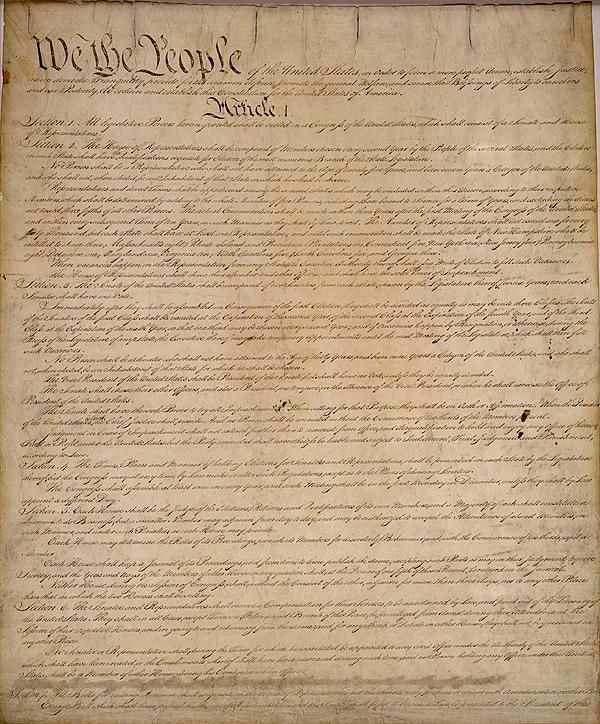
Beginning today and continuing each day for the next several weeks, this space will be devoted to exploring the enduring foundation of our nation. Click on the document below to go to a comprehensive Website to read the entire Constitution; beginning tomorrow, we will post the “Bill of Rights” – and the successive Amendments to The Constitution, one each day.
“On June 8, 1789, James Madison rose in the House of Representatives and read his thoughts about amendments to the Constitution. Based on the recommendations of several ratifying conventions and the fears expressed by the Anti-Federalists, his suggestions would insert many rights of the people into the Constitution.
“Not everyone was in support of a Bill of Rights, and much debate ensued. Many of Madison’s proposals were accepted, and some were rejected. The legislative process had to take place, with formal bills being introduced in the House, being voted on and approved, then sent to the Senate where they were debated and modified, and with both Houses eventually coming to agreement on twelve articles of amendment.
“On September 21, 1789, a House/Senate conference was called, and the differences between the versions of the two houses were worked out. Madison was one of the House managers in the committee. Several points were agreed upon, and the House was informed of the Senate’s acceptance of the compromise bill on September 25, 1789, the official date of submission of the Bill of Rights to the states. The Bill included the twelve articles as well as a preamble which, while not a part of the Constitution, is important as a way to place the Bill in historical context.”

 Columbia news, views & reviews