“The chemicals in bath salts seem to be cousins of the amphetamine agents that debuted as crystal meth. Most contain a synthetic designer drug that can induce a mind-rattling hallucination—but they’re unlikely to unleash an epidemic of cannibalism.” – The Daily Beast
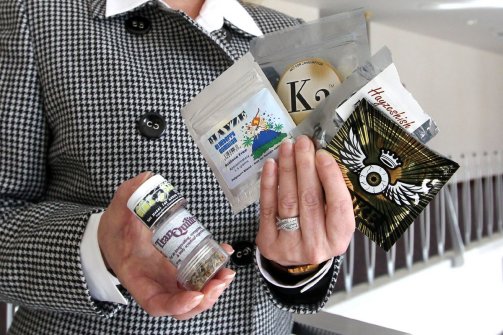
Diane Machen, a criminalist with the Washoe County Sheriff’s Office, holds samples of bath salts and synthetic cannabinoids that are examples of designer drugs targeted by lawmakers. Machen testified on two proposals that would help define and outlaw the synthetic drugs at the Legislature in Carson City, Nev. on Tuesday, March 15, 2011. (Cathleen Allison / AP Photo)
“The recent story from Miami of Rudy Eugene, the man who ate part of the face of Ronald Poppo, represents a remarkable moment in U.S. news. It merges seamlessly the irresistibly lurid, the uncomfortably lurid, and the so-completely-lurid-as-to-be-no-longer-faintly-comic in a single ultramodern, even futuristic story. It’s all here: we have security cameras (what were they doing there?), insanity, tragedy, dangerous new synthetic drugs, and a video record of the entire affair. How much excitement can we pack into a single sad tale?
“Plus everything about the drugs in question—so-called ‘bath salts’—is all-American. ‘Bath salts’ are a home-brew product right out of Breaking Bad: a hallucinogenic powder made by some lost chemistry major with pushy friends and serious debts. But please note that the implicated “bath salts” have nothing to do with actual bath salts, those crystalline things your parents brought your creepy aunt in New Jersey every time they visited. No these bath salts never were meant to soften the skin, if that was the hope of the creepy aunt.
No, the current rendition of ‘bath salts’ is part of another proud American tradition—false advertising. The drug dealers who make the stuff found a simple loophole—make a street drug with an enormous profit margin but give it the name of a boring household product, just to keep it below radar. And it worked, for a few years; who knew why teens were suddenly so interested in running to the convenience store for bath salts when they weren’t spending any time in the tub and who cared? A perfect ruse in all ways, relying on the winning combo of inattentive old people and sneaky kids—though it is likely that the publicity around the case will lead to a crackdown against their production and a wising-up by parents and cops everywhere.
In addition to all the side stories, the awful tale raises a basic question: could all the drugs in the world make a person want to eat another person? This is not as simple as we would like. Our fascination with and repulsion for cannibalism reach far back, farther even, than its tepid cousin, vampirism. It seems human have been worried about eating each other for the longest time, a primal yearning and repulsion no team of van Dyked psychoanalysts could begin to unravel. It goes back to the Greeks at least, when Zeus’ dear old dad, Cronus, was so worried about the prophecy that his child would overthrow him that he did what any worried parent would do—he ate all his children. Fortunately for Western civilization, Zeus (and Rhea, his mother) were a step ahead, feeding him a rock in Zeus’s place, thereby allowing Zeus to dodge ingestion, save his partially digested sibs and become king of the world. To continue reading this Daily Beast article, click here.
 Columbia news, views & reviews