 Here are the highlights from the Administration on Aging’s “Profile of Older Americans: 2011.”
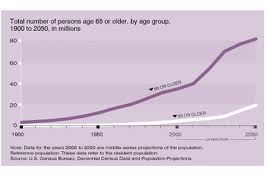
- The older population (65+) numbered 40.4 million in 2010, an increase of 5.4 million or 15.3% since 2000.
- The number of Americans aged 45-64 – who will reach 65 over the next two decades – increased by 31% during this decade.
- Over one in every eight, or 13.1%, of the population is an older American.
- Persons reaching age 65 have an average life expectancy of an additional 18.8 years (20.0 years for females and 17.3 years for males).
- Older women outnumber older men at 23.0 million older women to 17.5 million older men.
- In 2010, 20.0% of persons 65+ were minorities–8.4% were African-Americans.** Persons of Hispanic origin (who may be of any race) represented 6.9% of the older population. About 3.5% were Asian or Pacific Islander,** and less than 1% were American Indian or Native Alaskan.** In addition, 0.8% of persons 65+ identified themselves as being of two or more races.
- Older men were much more likely to be married than older women–72% of men vs. 42% of women (Figure 2). 40% older women in 2010 were widows.
- About 29% (11.3 million) of noninstitutionalized older persons live alone (8.1 million women, 3.2 million men).
- Almost half of older women (47%) age 75+ live alone.
- About 485,000 grandparents aged 65 or more had the primary responsibility for their grandchildren who lived with them.
- The population 65 and over has increased from 35 million in 2000 to 40 million in 2010 (a 15% increase) and is projected to increase to 55 million in 2020 (a 36% increase for that decade).
- The 85+ population is projected to increase from 5.5 million in 2010 and then to 6.6 million in 2020 (19%) for that decade.
- Minority populations have increased from 5.7 million in 2000 (16.3% of the elderly population) to 8.1 million in 2010 (20% of the elderly) and are projected to increase to 13.1 million in 2020 (24% of the elderly).
- The median income of older persons in 2010 was $25,704 for males and $15,072 for females. Median money income (after adjusting for inflation) of all households headed by older people fell 1.5% (not statistically significant) from 2009 to 2010. Households containing families headed by persons 65+ reported a median income in 2010 of $45,763.
- The major sources of income as reported by older persons in 2009 were Social Security (reported by 87% of older persons), income from assets (reported by 53%), private pensions (reported by 28%), government employee pensions (reported by 14%), and earnings (reported by 26%).
- Social Security constituted 90% or more of the income received by 35% of beneficiaries in 2009 (22% of married couples and 43% of non-married beneficiaries).
- Almost 3.5 million elderly persons (9.0%) were below the poverty level in 2010. This poverty rate is not statistically different from the poverty rate in 2009 (8.9%). During 2011, the U.S. Census Bureau also released a new Supplemental Poverty Measure (SPM) which takes into account regional variations in the livings costs, non-cash benefits received, and non-discretionary expenditures but does not replace the official poverty measure. The SPM shows a poverty level for older persons of 15.9%, an increase of over 75% over the official rate of 9.0% mainly due to medical out-of-pocket expenses.
- About 11% (3.7 million) of older Medicare enrollees received personal care from a paid or unpaid source in 1999.
 Columbia news, views & reviews