“Special Thanks to tour guide Bonnie of COUNTRYSIDE BUS TOURS through THE AMISH FARM and House©”
article and photos contributed by Mary Ellen Graybill
“The Amish are very slow to change,” began Bonnie, the tour guide for a small group of tourists who traveled here from as far away as Bakersfield, California.
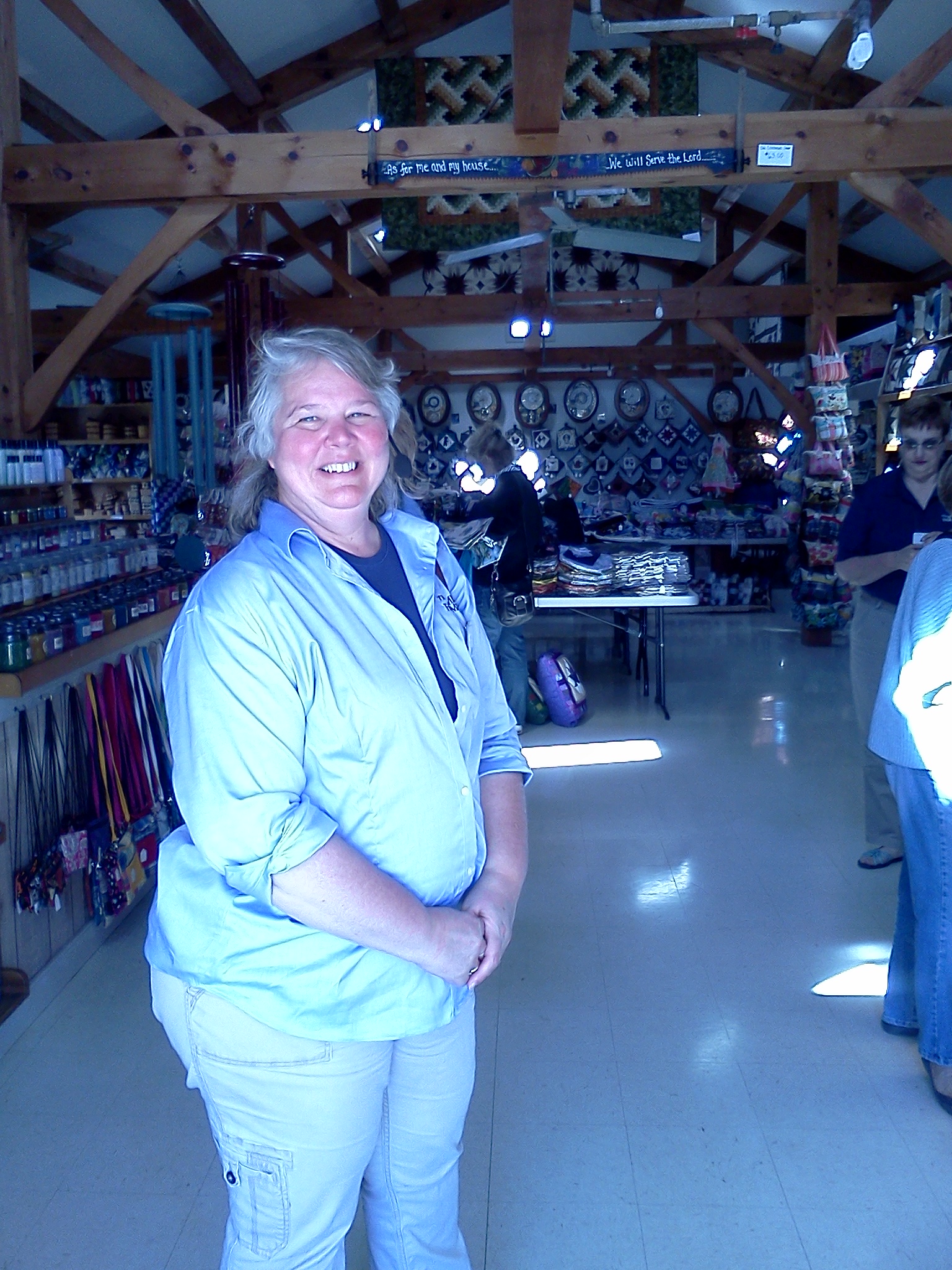 Our guide, Bonnie. (NOTE: other pictures from our tour are included at the end of the article.)
“There’s room for you on the bus,” said the Californian the day of the trip; so, I arrived late from Baltimore, just in time to enjoy the tour. For just $19.95, it was a valuable and educational trip to discover the “hidden treasures of the Amish country” … and we all got a flavor of the “real Lancaster County” as we learned about history, local ways and practical farming matters from our experienced driver-guide.
There are about 30,000 Amish in Pennsylvania, (16,000 – 18,000 in Lancaster County) divided into 182 congregations, with a BISHOP at the head of each one who determines the do’s and don’ts for his congregation, regarding rules of living. Rules come from the Bible and also tradition.
The families are strong and many have a dozen or more children. Houses are beautifully kept; with windows sporting green shades, no fancy dust gathering curtains generally … some Bishops disallow sashes.
Since the Amish live intermixed with others and prefer to live in the country or a small town like Ronks, they are not communal in their lifestyles. Each family has its own earnings, and spends separately. Bonnie said that 1/3 of the Amish farm; other have side businesses like blacksmithing, furniture making, preparing and selling baked goods, and quilts. The other 2/3’s of the Amish population work in construction trades like roofing, building, furniture making …
Food is famous: shoofly pie, ham, mashed potatoes and gravy are traditions at Amish eating establishments in towns like Intercourse, Bird in Hand, and Smoketown, said Bonnie.
One room school houses remain picturesque places on the horizon in Amish country. There are 202 one room school houses, said Bonnie, and “Each has 30 children in grades from the first grade through the eighth.”
There are no computers, no calculators, and students can actually do mental math calculations! “They can actually still make change,” said Bonnie.
In the home, the Amish are bilingual, keeping a Pennsylvania Deitsch dialect intact from years past, and speaking the English language with the business public and others. It is NOT Pennsylvania Dutch that is spoken, although that has become the common misunderstanding among visitors and tourists.
Most schooling ends at the 8th grade, and most marry and start a family, although marriage is not a must for all.
Views took scenes of everything from laundry hanging in the breeze across the yards, green shades in the windows, tobacco crops in ready for harvesting, friendly waves from the Amish workers. (The tobacco crop, by the way, generates $50,000 for planting 4-6 acres of land in the lush Lancaster valley) … the Amish still use mules or work horses, but a tractor can be used. Corn is another crop, raised for cattle feed. There is no electricity on the grid. Since the Amish believe one should not be “in the world” the communities have found innovative ways to create sustainable utilities such as propane use for refrigerators, stoves, lights, and water heaters. Sewing machines can be battery run, or recharged by solar power.
Outhouses instead of indoor bathrooms are prevalent. People do go barefoot in the warm weather. And, there are no rubber tires on vehicles like buggies, tractors, or other farm equipment.
Rural life is blissful to the passerby. The Amish are astute businesspeople; phones are not answered immediately, but business calls are returned promptly during normal business hours. Use of plastic to wrap hay is done, so the hay doesn’t spoil or stand outside in bad weather.
Tour guide Bonnie described how at age 16, a boy gets his first buggy, which has one seat. The gray buggy is used for farm transport. A buggy has close quarters and most people used to the comfort of a car would find it difficult to fit in, crawl over the front seat to get to the back seat.
Traditions of proper dress, place for worship and appearance abound in Amish country. A beard means a man is married; church services rotate from home to home on Sundays if space is available. Clothing is traditionally unchanging: black pants, pinks and lavenders for ladies and recently red, orange, and yellow seen, once banned.
Miniature horses have become popular due to the reasonable cost compared to regular horses, which can cost $3,000 – $5,000. Buggies cost $8,000 … but a pony cart much less, said Bonnie. A miniature horse costs about 1,200 – $1500. A pony cart and miniature horse can pull 3 times its weight.
IMPORTANT SAFETY NOTE FOR PENNSYLVANIA DRIVERS:
A DRIVER’S MANUAL IS AVAILABLE FOR SAFE DRIVING OF BUGGIES, BUT NO ONE IS required to read it, said Bonnie.
Products from the Amish, who do pay taxes, but do not pay into – nor collect from – social security, include dairy products that go to Land O’ Lakes, Hershey, and Turkey Hill. Amish made crafts can be found in many retail outlets.
Places visited in this bus tour were:
Riehl’s Quilts and Crafts, LLC which is located in Leola, PA (800-957 7105)— and they sell scooters for $199. each; also quilts and crafts, handmade, and customized, canned goods, and clocks.
Lapp’s Toys and Furniture, LLC for hand crafted doll furniture, and all sorts of toys from bygone days.
Countryside Road-Stand 717 656 9206 in Ronks has homemade soft pretzels and ice cream for the tourist, as well as an array of handmade quilts, crafts, jams and jellies, and you can see the farm animals on the back porch, feed them and enjoy the farm.
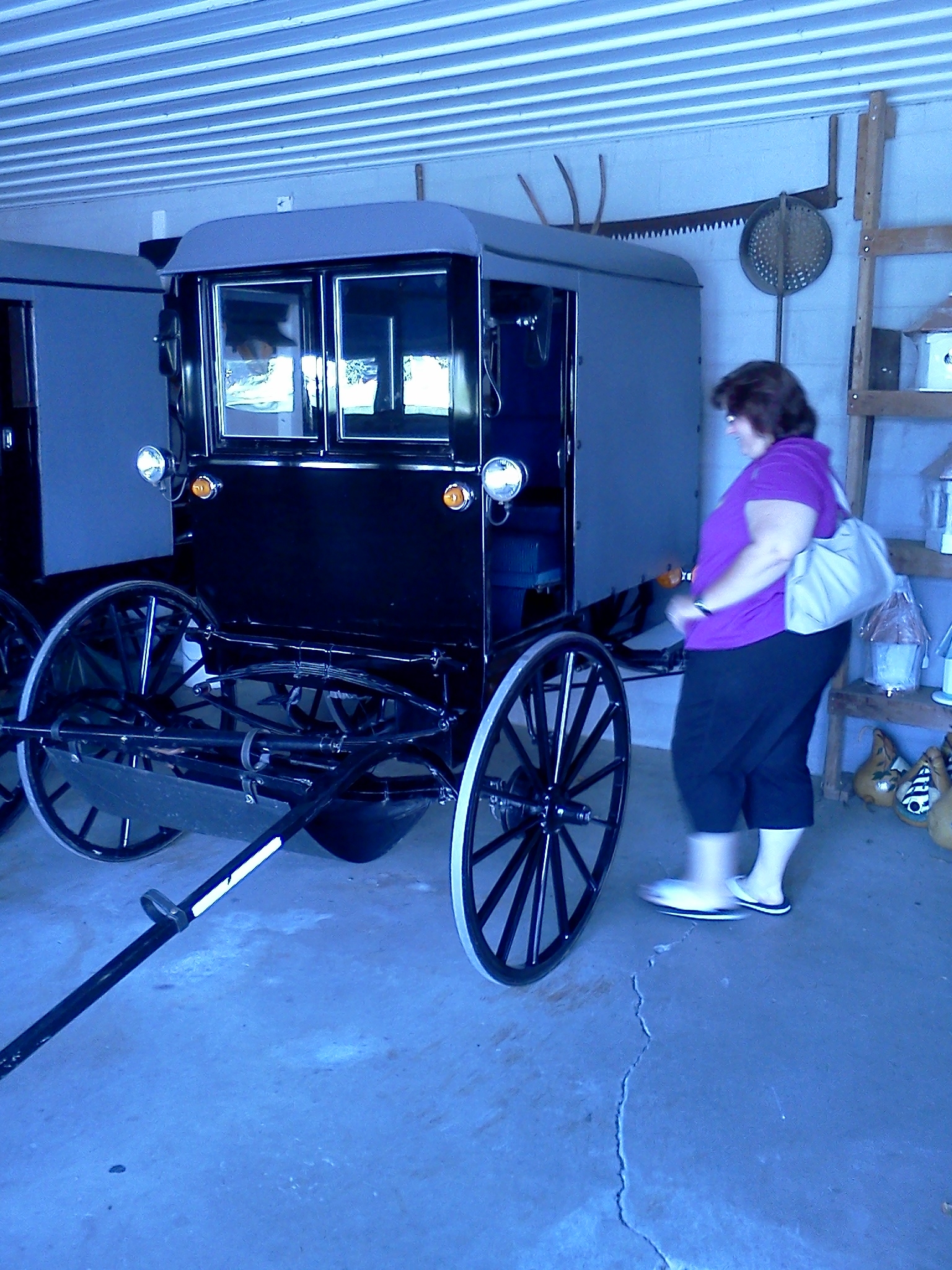 Visitors to Lancaster County find buggies very interesting.
 This wooden dollhouse with colorful hand-crafted furniture will delight girls of all ages.
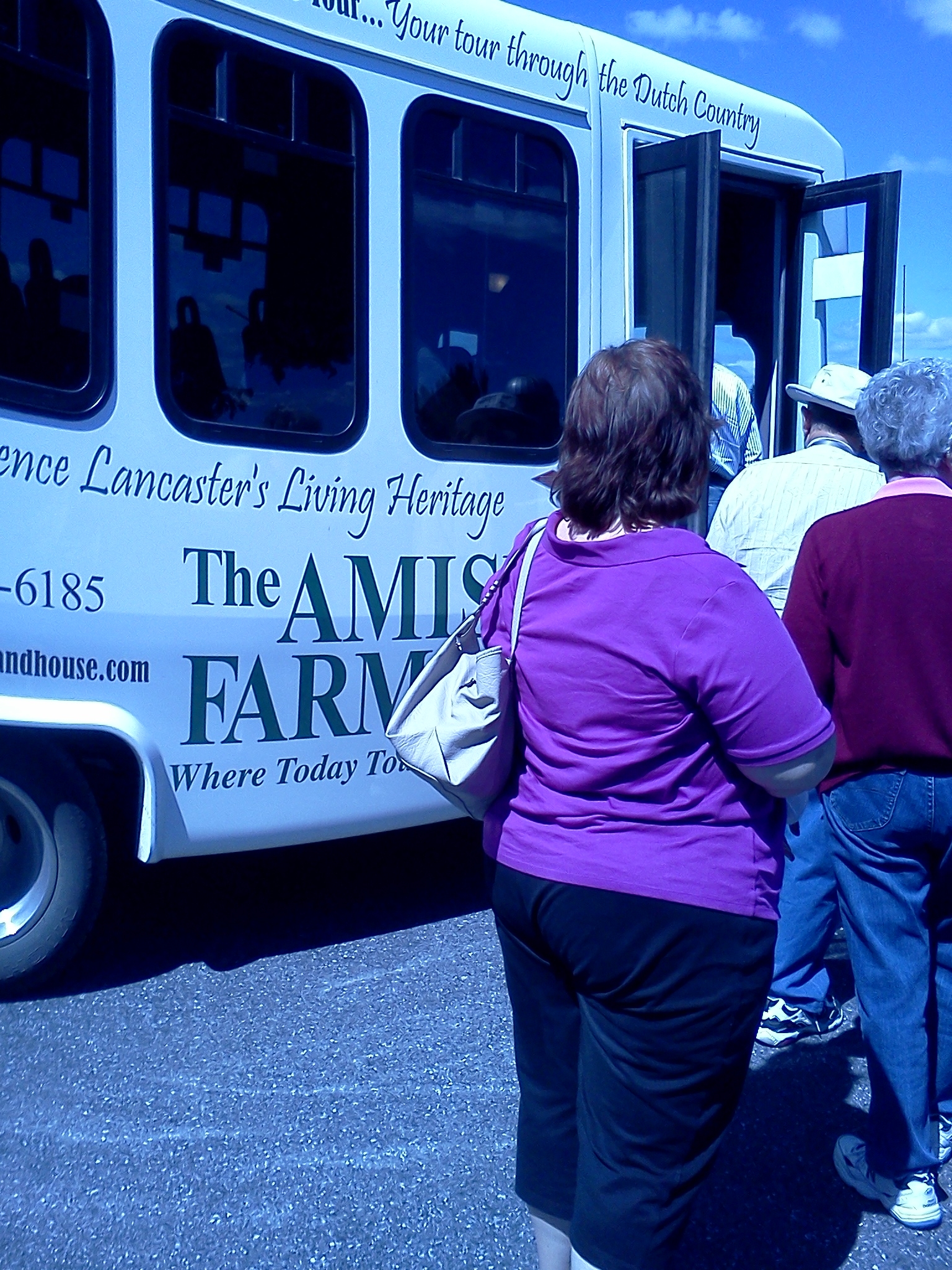 Getting back on the bus after a snack stop – soft pretzels, ice cream and home-made root beer.
 Decorative angel recycled from a church hymnal.
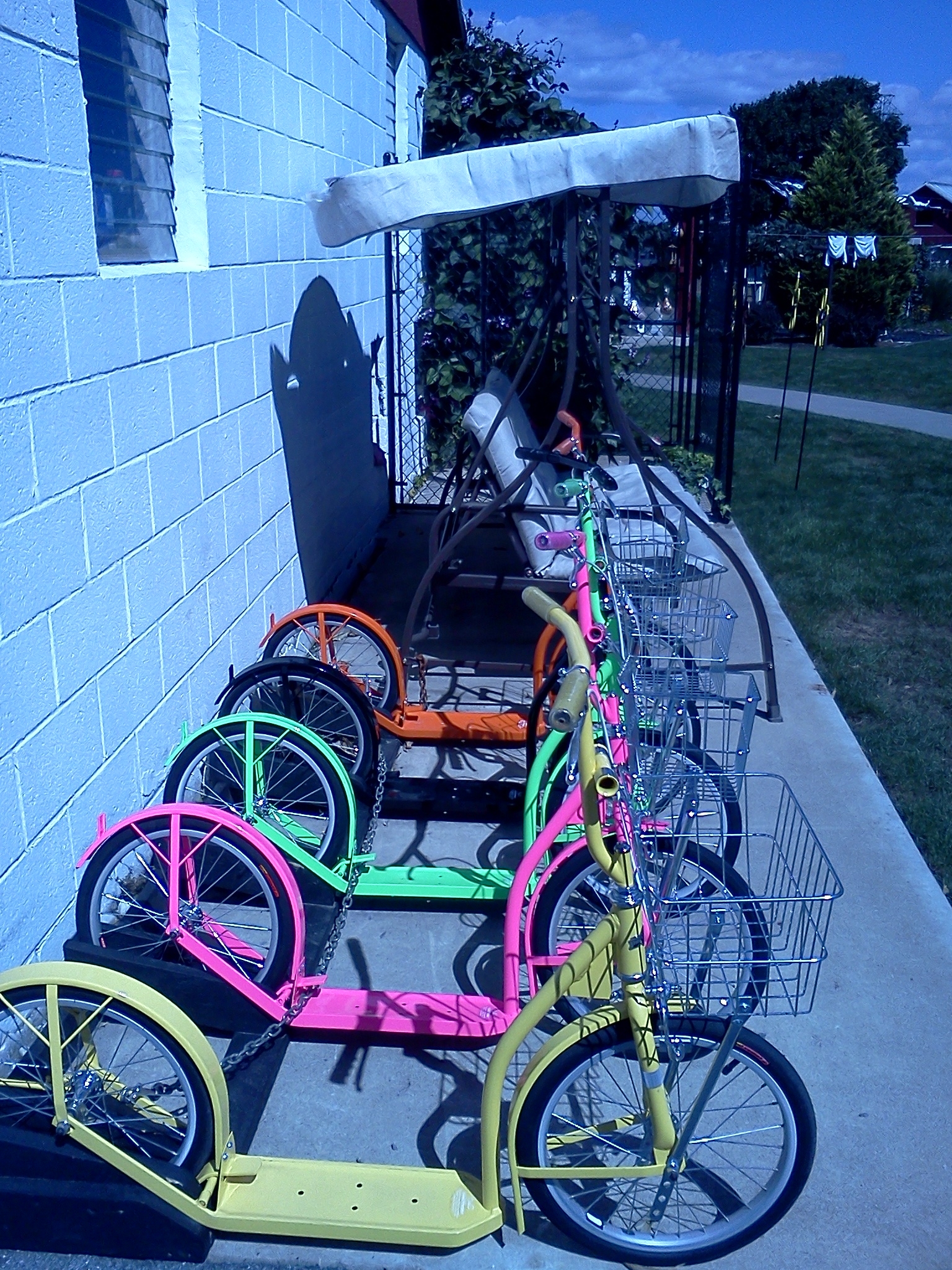 Brightly colored scooters invite anyone to take a ride!
 Columbia news, views & reviews