“A basic misconception has stymied our response to the obesity epidemic: the belief that food-related decisions are consciously and deliberately made. Our reluctance to interfere with or regulate the food environment is a direct consequence of the belief that people’s food choices reflect their true desires. However, given the large proportion of people who claim that they want to lose weight and the small proportion who are actually able to do so, we must concede that human behavior doesn’t always conform with professed goals.
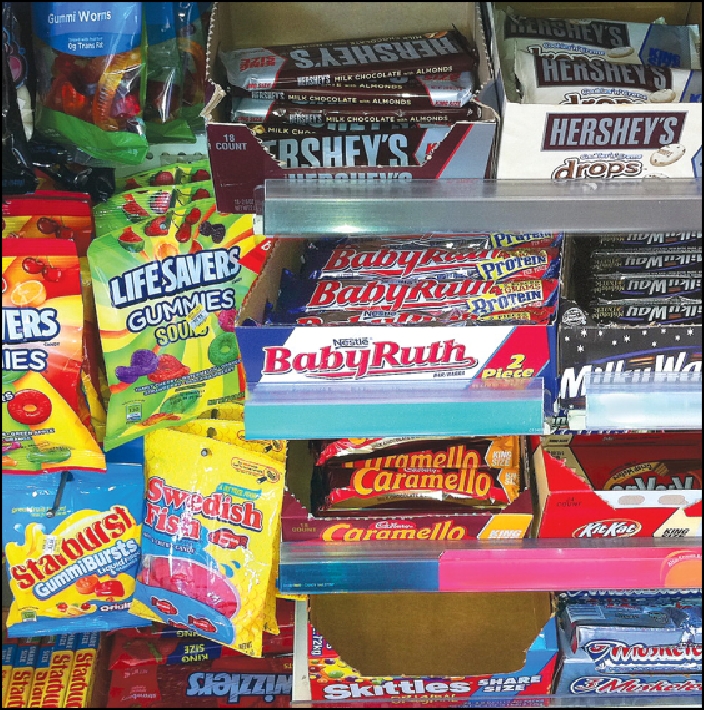
“The reality is that food choices are often automatic and made without full conscious awareness. In many cases, they may even be the opposite of what the person deciding would consciously prefer. What and how much people eat are highly influenced by contextual factors that they may not recognize and therefore cannot easily resist. A clear example of this influence is the placement of candy at the cash register, which is widely acknowledged to be a promotional strategy called “impulse marketing.” Impulse marketing encourages spur-of-the-moment, emotion-related purchases that are triggered by seeing the product or a related message.
“Impulse marketing works through the placement and display of products in retail outlets. In fact, the arrangement of products in stores is the most important malleable determinant of sales. For example, goods placed in prominent end-of-aisle locations account for about 30% of all supermarket sales.1 Indeed, vendors pay a slotting fee to retail markets to guarantee that their products will be placed in these locations. Placing products in prominent locations or spots where consumers will see them at the end of their shopping journey can increase their sales by as much as a factor of five.2 Much of marketing research concerns itself with how products are displayed and placed in stores.
“Placement of foods in prominent locations increases the rate at which they’re purchased; purchase leads to consumption; and consumption of foods high in sugar, fat, and salt increases the risks of chronic diseases. Because of this chain of causation, we would argue that the prominent placement of foods associated with chronic diseases should be treated as a risk factor for those diseases. And in light of the public health implications, steps should be taken to mitigate that risk.
“Even if many people acknowledge that food placement can attract attention, they think that those who respond to impulse marketing simply lack self-control and should learn how to resist such marketing strategies. Yet research using eye-tracking equipment has shown that the attention drawn by special displays, particularly on the ends of aisles, has more to do with the display characteristics than with the goals and capacities of individual people.3 Something about the arrangements and the edges of such displays compels a response. Marketers carefully pretest their promotional displays and often use the same sophisticated eye-tracking equipment to make sure that customers cannot ignore them. People lack the capacity to fully control their eye gaze,” To read this perspective from The New England Journal of Medicine, click here.
 Columbia news, views & reviews