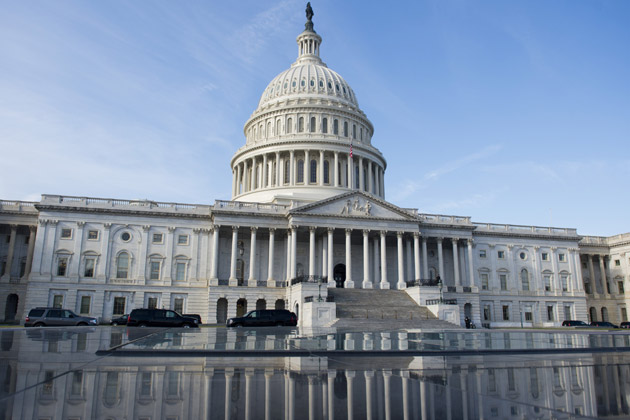
 Congress exempts itself from a number of laws that apply to the private sector and the executive branch. (Saul Loeb/AFP/Getty Images)
by Theodoric Meyer | ProPublica
“When CBS News reported in 2011 that members of Congress weren’t prohibited from insider trading, Congress moved swiftly.President Obama signed a law banning it within six months of the broadcast.
“But Congress is still exempt from portions of a number of federal laws, including provisions that protect workers in the private sector but don’t apply to the legislative branch’s approximately 30,000 employees.
“Here’s our rundown of measures Congress exempts itself from:
- Whistleblower Protections: Congress passed the Whistleblower Protection Act in 1989, which protects workers in the executive branch from retaliation for reporting waste, mismanagement or lawbreaking. The Sarbanes-Oxley Act gives similar protections to private-sectors workers. But legislative-branch workers — a category that includes congressional staffers as well as employees of the Library of Congress, the Architect of the Capitol and other offices —don’t get the same protections.
- Subpoenas for Health and Safety Probes: The Occupational Health and Safety Act empowers the U.S. Department of Labor to investigate health and safety violations in private-sector workplaces. If an employer doesn’t cooperate, the agency can subpoena the records it needs. The Office of Compliance, the independent agency that investigates such violations in the legislative branch, doesn’t have the power to issue those subpoenas.
- Keeping Workplace Records: A number of workplace-rights laws — the Age Discrimination in Employment Act, the Americans with Disabilities Act and others — require employers to retain personnel records for a certain period of time. But as a recent report on the congressional workplace notes, ‘Congress has exempted itself from all of these requirements.’ Congress is also exempt from keeping records of injuries and illness the way private-sector employers are.
- Prosecution for Retaliating Against Employees: If a private-sector employer retaliates against a worker for reporting health or safety hazards, the Department of Labor can investigate and, if necessary, sue the employer. Congress’ Office of Compliance doesn’t have that power — legislative-branch employees must file suit personally and pay their own legal fees.
- Posting Notices of Workers’ Rights: Workplace-rights laws require employers to post notices of those rights, which often appear in office lunchrooms. Congress is exempt from this requirement, though this has little real-world impact. The Office of Compliance sends legislative employees the same information each year, formatted ‘in a manner suitable for posting.’
- Anti-Discrimination and Anti-Retaliation Training: The No Fear Act requires agencies in the executive branch to provide such training to employees, but the legislative branch is exempt.
- The Freedom of Information Act: The public can request information from federal agencies, but Congress, the federal courts and some parts of the Executive Office of the President are exempt.”
 Columbia news, views & reviews