Last evening, the Columbia Water Company issued this notice: DRINKING WATER PROBLEM CORRECTED. The notice was posted at the Website and a number of local media outlets carried the “story.”
Everyone can now use the water; everything is OK again.
A look at what happened ought to provide some important “lessons learned.”
The Environmental Protection Agency provides volumes of guides for water companies to plan, prepare, practice and evaluate “what-if, never-gonna’-happen-here” incidents. Those incidents may include accidental, natural or intentional “man-caused” threats; threats like a contaminated water supply.
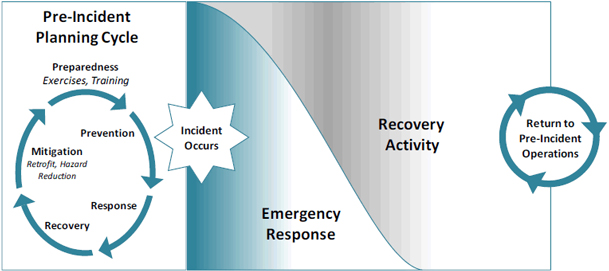
How to prepare and be aware lesson learned: All of us, the water company, the municipalities involved, the schools and citizens will find these guides and instructions useful; they’re listed here on the EPA’s Website: Emergency/Incident Planning, Response, and Recovery.
Communications lessons learned: Though the Water Company identified the intrusion at the water storage site and recognized the possible threat and risk to its subscribers, communications was irregular and delayed. Communication with subscribers is critical and all media must be provided with timely, accurate and consistent information. People get their information from a wide array of sources of media: newspaper, television, radio, online publications, Websites and social media.
The next time something like this happens, it would be wise to engage all media with consistent information. It would also be wise to follow some of the important guidance from the Oklahoma Emergency Response for the Water Supply System.
“Effective communication with the public both before and after a water supply disruption incident is important for a number of reasons. Health considerations may require prompt public notification, as in incidents where boil-water notices are necessary. Public notification may also be a legal requirement for many situations under both the Safe Drinking Water Act and State statutes. In addition, effective communication can minimize public confusion and frustration and can help to secure the public’s cooperation in implementing such response measures as water conservation.
“To be effective, public communication must be prompt, frequent, accurate, and credible. Moreover, the credibility of water supply system personnel must be established at the outset of any problem. A final and principal component of a public communication program should be the education of consumers before a problem arises so that they can be on the look-out for potential problems and will understand the basis for any water use restrictions.”
- Notify the public as quickly as possible following the discovery of a problem. It is crucial to credibility that initial notification is through water supply personnel, not state or federal personnel or press leaks.
- The designated spokesperson will need to communicate clearly with the public and to inspire confidence. (An employee of the water system or a municipal official can be chosen.)
- Avoid defensive postures and speculative responses in the face of negative reactions. It isbetter to admit ignorance than to speculate.
- Do not raise false hopes concerning the remedial time-frame or attempt to trivialize problems involved in responding to a serious water supply disruption.
- If the incident is substantial, failure to convey adequate information to the public could be particularly polarizing. Including the involvement of a person from the “public,” therefore, would provide a gesture of openness and respect. Such a person need not necessarily beinvolved in the decisions, but should be allowed to observe them impartially and in their entirety.
- After contamination of a public water supply well has been detected, the initial public communication is crucial to maintaining public confidence in the integrity of the water supply system. The duration ofthe initial communication phase may vary, depending upon the severity of the contamination incident, but it encompasses the time from the discovery of the contamination to the provision of interim remedial measures.
- Whether the public can drink the water is obviously the most important information to convey at this stage. However, people will also want to know whether they can use it for bathing, washing dishes, etc.
Methods of communicating the information to the public regarding a contamination incident include:
- One Spokesperson — To ensure consistency and accuracy, the one person designated aboveshould be responsible for the flow of information to the public and the media.
- Information Sheets — Some of the information that needs to be disseminated during the initial communication phase can be prepared in advance, such as water system information, boil orders, and conservation measures. It may be appropriate to have a prepared “initial news release,” that notifies the public that there has been a contamination incident, and gives system personnel some time to assess the incident and prepare a more detailed “explanatory news release.”
- Contact Media — A press conference may be an appropriate venue for disseminating information to the media.
- Contact External Notification Network — Media, ;ocal politicians, congressmen, civic leaders, and the governor should also be provided with the basic facts surrounding the incident, and can be requested to refer the media to the designated spokesperson.
- Notify Public Directly — If there is an acute public health threat associated with the contamination incident, it may be necessary to disseminate information directly through dramatic methods, such as civil defense sirens, sound trucks, and door-to-door notification.
- It is important to keep the public informed following the initial communication phase. Interest in the problem may wane if providing alternate supplies has caused relatively little public inconvenience,and support for costly, long-term solutions may erode. If the public is experiencing long-term inconvenience as a result of the incident, it will want periodic reassurance that efforts are underway to restore the water supply system.
As Shakespeare’s play title, All’s Well That Ends Well, suggests, everything seems to have turned out “well” as the water is now OK to use.
There remain a number of questions and opportunities for law enforcement, the Water Company, citizens, municipalities and other agencies.
1. How did marginalized persons and special needs populations get the emergency messages?
2. How were home-bound persons and special needs populations accommodated with alternative water access?
3. Why was there such a time lag from the initial incident and the notification to shareholders?
4. How and when will the Water Company “harden” their water sources against intruders? Surveillance cameras, without continuous monitoring are not answers. Electronic “anti-intrusion” devices might be.
5. Will citizens with online access take advantage of signing up for the SWIFT 911 Notification system?
6. Will the Water Company take a proactive role and actively engage and educate citizens without online access to encourage them to sign-up for the notification process?
7. What is the role of the borough’s emergency management coordinator in incidents like this?
8. What is the status on information about the purported intruder?
9. Is any tresspass against a national infrastructure asset a “homeland security threat?” According to Homeland Security Presidential Directive 9, “The Attorney General, the Secretary of Homeland Security, and the Director of Central Intelligence, in coordination with the Secretaries of Agriculture, Health and Human Services, and the Administrator of the Environmental Protection Agency, shall develop and enhance intelligence operations and analysis capabilities focusing on the agriculture, food, and water sectors. These intelligence capabilities will include collection and analysis of information concerning threats, delivery systems, and methods that could be directed against these sectors.
 Columbia news, views & reviews