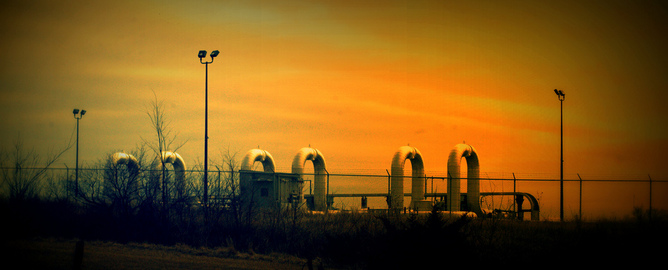
 The debate around the Keystone XL pipeline represents concern over the environmental effects of non-conventional fossil fuels. Flickr/shannonpatrick
“In the US, extraction of non-conventional fossil fuels is booming. Investment in extra-heavy and heavy oils, oil shales and sands, tight oil and gas, shale gas and coal seam gas is taking off as companies and US governments look to reap the financial and political benefits.
“But the boom comes with major environmental risks, from extraction, transport and fugitive emissions. In fact, just this week we have seen an Exxon oil spill in Arkansas, where an estimated 12,000 barrels of Canadian heavy crude oil were spilt into residential areas near the town of Mayflower from a 65-year-old pipeline.
“To date, environmental and safety regulation of these fuels has been grossly inadequate. And yet there is pressure for still more cutting of ‘green tape.’
Environmental risks of extraction and transport
“The threats from extraction are well known, and we’ve seen them in Australia as well as in the US. When under-regulated, the ‘fracking’ process used to release natural gas and tight oil can threaten water quality. A major EPA safety report is due in 2014, but investment isn’t waiting. It’s proceeding strongly under the impetus of both market forces and pressure from the US Federal Government which is keen to encourage gas export, especially as LNG to Europe, to reduce Russia’s influence.
“An issue Australia doesn’t face is the risk from heavy, corrosive, carbon-intensive oil from tar sands; in this case, extracted in Canada. In the US, Public concern about the multiple environmental risks associated with the extraction, processing and pipelining of this fuel is focused around a pending Federal decision about the Keystone (XL) pipeline. The State Department’s technical report was released on March 1. The environmental risks of such a pipeline were demonstrated by the Enbridge Energy case of 2010 and this week’s spill in Arkansas.
“Apart from profit, potential pipeline approval is again driven by geopolitics. The pipeline would help maintain smooth relations with the Canadian Government but, as some suggest, also provides an alternative to heavy but conventional Venezuelan crude currently refined on the Mexican Gulf coast.”
Click here to continue reading this article at The Converstion.
 Columbia news, views & reviews