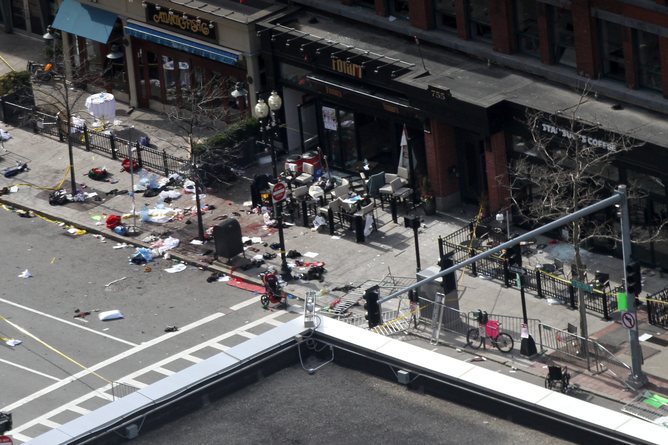
 The Boston Marathon bombings sent shockwaves across the world – how have the American people and the media reacted? EPA/Billie Weiss
“Winters in Boston are bitterly cold and excessively long. So it’s little wonder that residents greet Patriot’s Day – the mid-April, Massachusetts-only holiday marking the Revolutionary battles at Lexington and Concord – with such enthusiasm. To mark the ritual start of spring, Bostonians pack Fenway Park to watch the Red Sox, and they line Boylston Street to cheer on the finishers of the prestigious Boston Marathon.
” … that festive atmosphere disappeared in an instant, as two shrapnel-laden bombs tore through crowds gathered near the marathon’s finish line. The devices detonated ten seconds and 100 metres apart, leaving at least three dead and over 170 wounded.
“Though the Obama administration did not formally call the bombings an act of terrorism until Tuesday morning, it was hard not to draw parallels to the September 11th attacks twelve years ago: the gruesome images, the wandering and uncertain bystanders, the unbroken media coverage.
“As they did twelve years ago, most Americans witnessed the attack and its aftermath through a constant stream of news reporting. Within an hour of the explosions, news networks switched over to wall-to-wall coverage, chasing rumours of additional bombs and wrangling interviews with eyewitnesses.
“With little information to go on, anchors had ample time to speculate. Yet they resisted the urge: when counterterrorism experts appeared on the news network MSNBC, the hosts repeatedly emphasised the importance of avoiding speculation that was not based on well-sourced information.
“Such restraint was a sign that news media have learned from the last few decades of covering terrorist attacks on American soil.” To continue reading this Conversation article, click here.
 Columbia news, views & reviews