
Columbia Ghost made this observation some days ago:
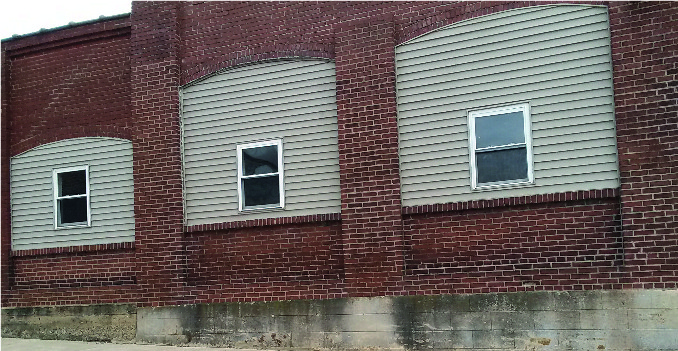
” The Bridge Is Returning To The 30′s Look ” – while Columbia HARB recently approved putting but ugly “80′s” metal siding over the “30s” windows on the building at the South West corner of Second and Chestnut at the foot of the ” Bridge ”
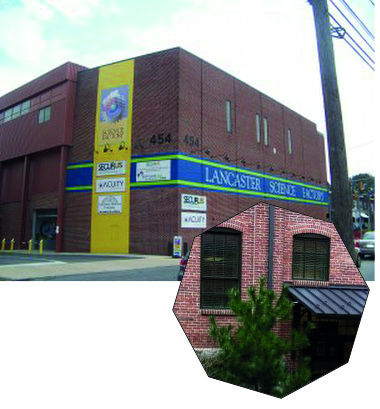
why not insist on some tasteful replacement windows like they did at the TH Experience, and the Science Factory in Lancaster ?
Isn’t HARB supposed to be preserving our history ??
[NOTE: Here’s one problem we have. CG says that Columbia’s Historic Architectural Review Board (H.A.R.B.) recently approved. How does Sid or Sally Citizen to find evidence of that approval. Are the agendas and minutes of minutes available online? We could not find them.]
Mr./Ms. Ghost, thanks for the observation. Two of the properties you identify are on “gateways to Columbia.” One is just off the “old bridge” and one is just off “the new bridge.” Each is part of a visitor’s first impression of Columbia.
“the building at the South West corner of Second and Chestnut at the foot of the ‘Bridge’”.
some of the windows at the Lancaster Science Factory


Rendering of THE – This rendering shows the windows as approved by the Historic Architectural Review Board (H.A.R.B) at the onset of construction.
A Columbia news, views & reviews report of a 2011 H.A.R.B. meeting included this comment from a Board member:
“The building looks fabulous, but it not what we approved. We approved a building with windows and a roof. I never would have given my approval for an unfinished building; I would have suggested they just take away that unfinished floor.”
The borough Website describes the workings of the H.A.R.B. this way:
The HARB is the functional arm of the Borough’s Historic District Ordinance. The Board works to develop comprehensive design guidelines, educational materials & offerings to promote the concept of historic preservation and gain widespread public support.
All exterior work proposed for buildings in the Borough’s Historic District are examined, from permit applications to the Borough, by the Board’s consultant. Work that can be “administratively approved” by the consultant is released for immediate construction. Work needing HARB (Board) approval is presented by the applicant to the Board for consideration of appropriateness. The Board provided recommendations to Borough Council for approval.
Potential applicants are encouraged to ask to be placed on the meeting agenda to discuss design concepts and receive comments from the HARB before finalizing their conceptual plans and submitting a completed application.
While H.A.R.B. recommends, there are folks within the Borough’s operational channels that can (and do) stray from the recommendations of H.A.R.B.
“This does not mean that historic districts must maintain museum-like environments, frozen in a historical period. Nor does it mean that the retention of architectural details and historic environments should be disregarded. Property owners have the responsibility of complying with the historic district ordinance, and the municipality has the responsibility of implementing the ordinance through some agreement as to the degree of historic character to be preserved in the historic district. Consideration should be given to the demographic profile of the historic district because the particulars of that profile will indicate the extent to which property owners will be willing and/or able to cooperate with the ordinance. Know your community!
“Another consideration is the physical characteristics of the historic district; for example, are the buildings large and ornate, are they detached or attached, are they frame, brick, or stone? If, for instance, there is a preponderance of absentee landlords, low-income households, or elderly homeowners, and the buildings in question have high maintenance costs, property owners even with the best of intentions may not be able to undertake essential repairs and maintenance, as compared to a neighborhood where the buildings are more modest in size. Is the district a mixture of residential and commercial properties, or is it composed primarily of commercial buildings? The financial ability of property owners, their willingness to comply with the requirements of the ordinance, and the degree to which a consensus has been reached as to the historic character of the area to be preserved will determine the success or failure of preserving the historic district.” – SOURCE: “Historic District Designation in Pennsylvania“
 Columbia news, views & reviews