“We’re going to make sure that we’re not building a militarized culture inside our local law enforcement.”
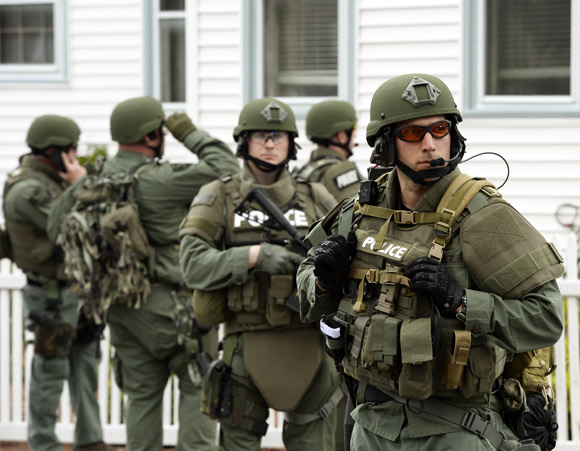
Yesterday, the President of the United States said “he was upset to hear the young people in the meeting describe their experiences with police.” – The Washington Post
- Before Ferguson … “Scary stuff … militarized police”
- Before Ferguson … “Who’s to blame for Battlefield America? Is it militarized police or the militarized culture”
- Before Ferguson … “Maher rails against militarized police culture in outstanding monologue” -WATCH THIS VIDEO
- Before Ferguson … “Rise of the Warrior Cop”
- Before Ferguson … Norm Stamper’s book, “Breaking rank: A top cop’s exposé on the dark side of American Policing”, was a harbinger of what was going to happen when law enforcement goes awry. Stamper says in this Huffington Post article, ” … we got a 10-year campaign of increasing militarization, constitution-abusing tactics, needless violence and heartache as the police used federal funds, equipment, and training to ramp up the drug war. It’s just tragic.”
- Seven years before Ferguson … “Some states put untrained cops on duty”
- Five days ago, this Washington Post article appeared: “How the Obama administration gives away military-grade weapons to local police.”
- Before Ferguson … The selection (below) comes from a article in the September 2014 Journal of Theoretical and Philosophical Criminology: “Police Officers as Peace Officers. Most states use the term ‘peace officer’ to describe individuals who have police powers. Peace officers are primarily responsible for order maintenance or keeping the peace, but how peace officers go about keeping the peace is discretionary. The police peacekeeping function does not presuppose that the police operate under a peacemaking philosophy. On the contrary, most police agencies operate under a warmaking model that encourages coercion, intimidation, and, often, violence. The downside of the war model is that it perpetuates distrust, fear, and insecurity among the public and significantly undermines the ability of the police to do their jobs effectively.”
YESTERDAY … The White House issued this FACT SHEET: Strengthening Community Policing
Columbia news, views & reviews has long been a staunch advocate for community policing programs that incorporate transparency, open communication, visibility and citizen interaction. The Lincoln, Nebraska Police Department’s Webpage on Community Policing is upfront, candid and transparent as it begins:
“community policing is a value system which permeates a police department, in which the primary organizational goal is working cooperatively with individual citizens, groups of citizens, and both public and private organizations to identify and resolve issues which potentially effect the livability of specific neighborhoods, areas, or the city as a whole. Community-based police departments recognize the fact that the police cannot effectively deal with such issues alone, and must partner with others who share a mutual responsibility for resolving problems. Community policing stresses prevention, early identification, and timely intervention to deal with issues before they become unwieldy problems. Individual officers tend to function as general-purpose practitioners who bring together both government and private resources to achieve results. Officers are encouraged to spend considerable time and effort in developing and maintaining personal relationships with citizens, businesses, schools, and community organizations.”
So, too, is the North Carolina town of Rural Hall’s.
 Columbia news, views & reviews