Yesterday, over 200 officials, planners, administrators and professionals from state, local and county government, nonprofit community agencies, private businesses, banks, colleges and universities, consulting firms, and interested citizens attended the South Central Pennsylvania Regional Summit in Camp Hill. The day-long conference included a full agenda of panelists presenting “new takes on old issues.”
The Summit featured “sessions in four tracks that offer a broad range of topics for groups that serve communities. The tracks included “Local Government Innovation and Cooperation, Housing and Community Development, Regional Connections and Issues, and Higher Education.” A theme of “connectivity” seemed to pulse through the day.
Throughout the day, conversations in the sessions, at breaks, at lunch, seemingly all the conversations dwelt on the “connectivity” of the need for an educated workforce; codes development and enforcement; community engagement; transportation; inclusiveness of diverse populations; planned and considered land use, etc. We spoke with transportation providers, elected public servants, municipal representatives, planners, educators, codes specialists; transportation experts and others about the issues impacting the people who live in Central Pennsylvania’s communities.
Governor Tom Wolf addressed the summit attendees; he stressed his important initiatives, including a skilled work force; a modernized tax system that includes lessening the homeowner burden to finance education, a natural resources severance tax; and being mindful of all populations as this part of the state continues to experience major population growth.

We attended sessions that dealt with “best practices and new approaches on key issues in blight and community revitalization, housing rehabilitation, homelessness, senior and disability housing, affordable homeownership and housing counseling” and other community development topics.
We got the opportunity to talk with community leaders, planners; elected public servants and other visionaries who are keenly interested in identifying and addressing the issues of enhancing “the quality of life of South Central Pennsylvania citizens by improving governance in the region; by encouraging cooperation among governmental entities; by fostering public-private partnerships; by collaborating with other non-governmental organizations; by developing and communicating ‘best practices’ in local government service delivery; and by facilitating the reduction of sprawl, all to make governance more efficient, effective and economical.”
RELATED TOPICS
“Another standardized test – this one called PARCC! But, here’s what’s different” – The Conversation
(“Pennsylvania has been active in the American Diploma Project Network since 2005, aligning its standards to the expectations of postsecondary education and careers. The Pennsylvania State Board of Education adopted the Common Core State Standards in mathematics and English language arts/literacy in July 2010. The state joined the Partnership for Assessment of Readiness for College and Careers as a participating state in the spring of 2010 and helped shape PARCC’s proposal for a common, next-generation assessment system. Pennsylvania has not committed to implementing the PARCC assessments and is not administering them in 2014-15.”)
“Shipping oil by rail is booming. Technology can make it safer” – The Conversation
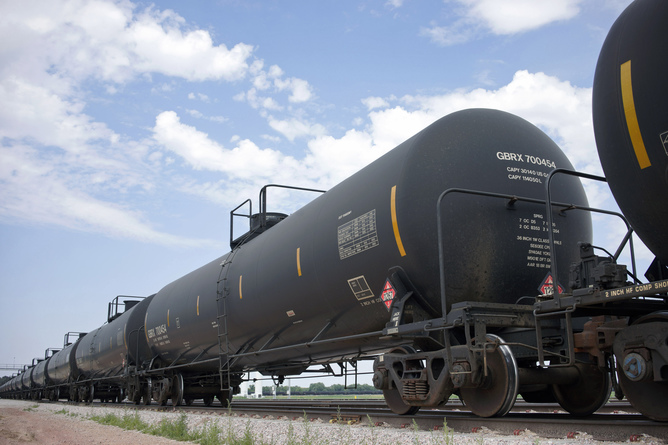 The National Transportation Safety Board made an ‘urgent’ recommendation to improve the safety of oil-carrying rail cars. Rick Wilking/Reuters
Be sure to read this entire comment following the above article: “’One minute of leaking would be equivalent to two tanker trucks spilling,’ says Thomas. ‘Everything’s tiled around here, so the oil would get into the tiles and could go for miles. Furthermore, I’ve talked with people who install tile, who say it’s really hard to repair it once it’s been cut.’ To top it all off, the much ballyhooed Keystone Pipeline would not even move much Bakken or Canadian crude. Primary flows of oil by rail are not to the Gulf Coast, but rather to Northeast refineries, concentrated in Delaware, Pennsylvania and New Jersey.If we must ship crude oil by train, do it safely.”
Another commenter says, “Tell the Federal Railroad Administration to enforce railroad health and safety rules strictly, in other words, to tip the balance toward the safety of the people who live within a half mile of the tracks, the blast zone.”
“Effective community policing will be demanded”

In Chris Gulotta’s outstanding presentation, he asked people to read and pay attention to the just released President’s Task Force on 21st Century Policing which “identifies best practices and offers recommendations on how policing practices can promote effective crime reduction while building public trust.” The infrastructure best practices provide nothing if there’s no attention paid to constructing “collaborative relationships between local police and the public.”
 Columbia news, views & reviews