PRESS RELEASE: Centers for Disease Control
In the United States, motor vehicle–related injuries are the leading cause of death among children of all ages. In 2009, a total of 1,051 passenger vehicle occupants aged <16 years died as a result of crashes; 45% of these occupants were unrestrained. The lack of restraint use increased with age among the fatally injured. Specifically, 31% of children aged <4 years, 42% of children aged 4–7 years, 53% of children aged 8–12 years, and 67% of children aged 13–15 years were unrestrained at the time of the crash.
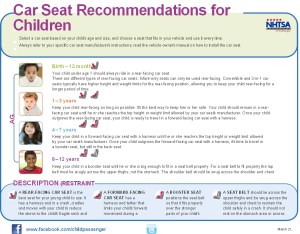
During 1975–2009, child restraints saved an estimated 9,310 lives. Child safety seats reduce fatal injury by 71% among infants and by 54% among toddlers. Belt-positioning booster seats reduce the risk for injury by 59% compared with seat belts alone, and seat belts reduce the risk for fatal or serious injury by nearly 50%. Seating position also contributes to child passenger safety. To keep child passengers as safe as possible, drivers should properly restrain children aged <13 years in a back seat and follow the American Academy of Pediatrics’ child passenger safety recommendations, including the updated recommendation that all infants and toddlers ride rear-facing until they are aged 2 years or until they reach the highest rear-facing weight or height limit allowed by the manufacturer of their seat.
This year, National Child Passenger Safety Week is September 18–24. As part of the campaign, Saturday, September 24, is designated as National Seat Check Saturday, when drivers with child passengers are encouraged to visit a child safety seat inspection station to have a certified technician inspect their car seat and give hands-on advice free of charge.
 Columbia news, views & reviews