Earlier this week, several people called to discuss their dismay and disbelief with certain actions and decisions made within the Borough. In each case, the callers wanted to have assurance that “their identities not be revealed.” Each suggested that they did not want to be targeted for their observations.
It is not the first time that the fear of selective reprisal, diminishing or casting aspersions has been suggested. We are reminded of this quote from a writer writing about the search and difficulty of achieving positive change in an African nation:
“The fact is, there will always be a significant sector that resists change because they are beneficiaries of the existing order and the reformists have to be more pragmatic in dealing with the challenges. There will be a lot of people who support change but are reluctant to show it because they fear that those benefiting from the status quo have control of the power structures, which they can use against them.”
In “The Prince,” Machiavelli wrote of the component groups who would be affected by any popular change in a system.
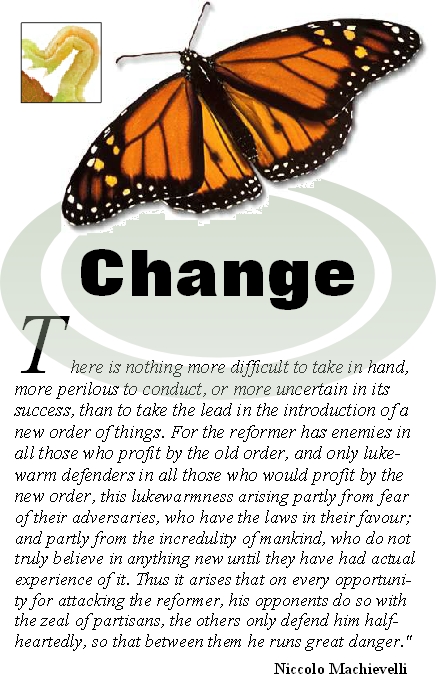
“Machiavelli’s words indicate that initiating a new order is not only difficult to handle but it can also be a dangerous exercise. The biggest impediment is represented by those that profit from the existing order. They enjoy the benefits of the status quo and depend for their survival both literally and politically on the existing order. They owe their status to the patronage of the leadership and therefore have the most to lose from any change of leadership. This might explain the dogged resistance to change by a seemingly large section (of any empowered agency) , when it is clear that change is not only necessary but inevitable.
“Life might be extremely tough for the majority, but there is a section that is thriving, perhaps better than they have ever done before. They are even prepared to postpone change in order to continue enjoying the benefits of the current order. How can you, when you hold a senior government position where you set the rules, with its generous official and unofficial perks, and you are also a new farmer with interests in the lucrative tobacco and flower industry, and you have unlimited access to financial lines meant to empower the formerly oppressed, all of which enable you to purchase with your own cash the most luxurious automobile there is in the world and build the most luxurious property and perhaps even enable you to marry another wife?
“The other reason in Machiavelli’s quote for the lukewarm support among change agents is that by nature people like to experience something new before they can believe in it. There is a certain inertia whereby people are more comfortable with an existing order for no reason other than that they are used to it. … people are generally reluctant to change the order of things and even if they know that it might benefit them, they are not sure they want to disturb the status quo. This lukewarm support does not encourage the change agents, who find themselves vulnerable.
“The fact is, there will always be a significant sector that resists change because they are beneficiaries of the existing order and the reformists have to be more pragmatic in dealing with the challenges. There will be a lot of people who support change but are reluctant to show it because they fear that those benefiting from the status quo have control of the power structures, which they can use against them.”
The despotic nature of power seekers is the same everywhere, in all organizations and societies. They hate free thinking and they deplore any thought that differs from theirs and those who curry their favor!
When we read Machiavelli’s words, we always are reminded about a few other remarkably similarly crafted words:
“When in the Course of human events, it becomes necessary for one people to dissolve the political bands which have connected them with another, and to assume among the powers of the earth, the separate and equal station to which the Laws of Nature and of Nature’s God entitle them, a decent respect to the opinions of mankind requires that they should declare the causes which impel them to the separation.”
 Columbia news, views & reviews