Source: theconversation.au.edu
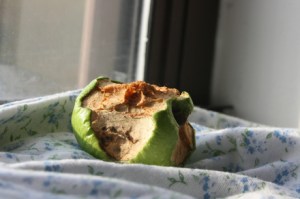
The browning of apples illustrates how natural sugars in foods modify proteins and amino acids.quinn.anya/Flickr
Educated, wealthy and living longer than ever before – or are we? Have you noticed that despite people often making healthy food choices, we are developing chronic diseases at much higher rates?
A number of these chronic diseases involve the body turning on itself (autoimmunity). They include type 1 diabetes, coeliac’s disease, thyroid diseases, allergies and rheumatoid arthritis.
All of these are considered to be diseases of so-called wealthy nations. And we are still learning about why our bodies are rejecting our food and lifestyle choices and leaving a wake of diseases for us to combat.
What’s on your plate?
We want to have access to all types of food, such as strawberries and asparagus, even when they’re out of season. In order to deliver, the food industry develops ingenious ways of obtaining, preserving and sustaining popular food choices.
But this often comes with more than one price.
Antioxidants, vitamins and amino-acid content, for instance, all decrease over time and with processing and cooking.
There can also be modifications to nutrients within the food, which can lead to the “ageing” of food. These alter the structure of proteins, changing the way foods are absorbed in our gut.
One particular chemical process, which occurs during food “interference” via processing and storage, is called advanced glycation. This happens when natural sugars found in foods modify proteins and amino acids.
A rapid version of this chemistry is seen in the browning of an apple upon peeling or cutting it.
We know that advanced glycation has increased in our foods as a result of increased food processing and a migration to faster cooking methods such as frying. Coincidently this has occurred over the same time period as the increase in chronic diseases.
Let’s take the humble capsicum (bell pepper). Before it reaches the kitchen, it’s often been in cold storage; it’s been gassed to ripen it, irradiated (if from overseas) and polished for a better shine.
Each of these processes leads to irreversible cross-linking of nutrients, which changes their structure.
So, instead of seeing a capsicum with lots of vitamin C, our body has a case of mistaken identity. The changed proteins and amino acids fool our bodies into thinking it’s trying to digest a new vegetable.
Our “meet-and-greet team”, the immune system, becomes a bouncer instead of the host and tries to throw this unknown protein or vegetable out the door by treating it as a foreign invader, such as bacteria.
This less-than-warm greeting is remembered for the next encounter where the reaction is even less friendly since cells and antibodies which recognise the “foreign” food proteins are already present and ready to do battle.
It’s a bit like certain foods have put on a disguise.
The road is long
So what happens to our “healthy” food from the time it leaves the farm or market garden? Click here to read the entire article.
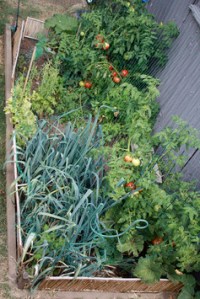
Growing your own vegetables may be one way to eat truly healthy food. Mountain/\Ash/Flickr
 Columbia news, views & reviews