Chemicals tend to get a bad press, but we wouldn’t be here without them. abiomkar
One of the best tricks of making a horror movie is not to show too much, allowing the imagination to create the monster. We can’t see molecules, which is what makes them scary. We fill this vacuum with fairy stories about what molecules are. We stereotype them as toxic, or dangerous.
To say chemicals are toxic is rather like saying people are bad. Some are. Most aren’t. It depends. Most molecules you meet are not dangerous, which helps explain why you’re alive.
My students and I work with molecules every day: we study what they do, and how to make them. None of us has ever seen a molecule with our naked eyes, but we know they’re there, and what they look like. Understanding molecules is like learning a language: it takes time, but eventually you come to see the beauty.
Just as a language can be used to create things that are beautiful, or ugly, inspiring or harmful, so atoms can be arranged to form molecules that are tasty or toxic, fragrant or explosive.
“Molecule” is another word for “chemical”. Typically we talk about a molecule as a single thing, and a chemical as a collective – rather like a person is part of a population. The whole world consists of molecules – we are immersed in them. But never is our relationship as intimate as when we eat them.
Food is a bunch of chemicals, nothing more, nothing less. When we eat, we eat chemicals. Some are simple, such as water or salt. Some are complex, such as the proteins in steak. But they’re all chemicals.
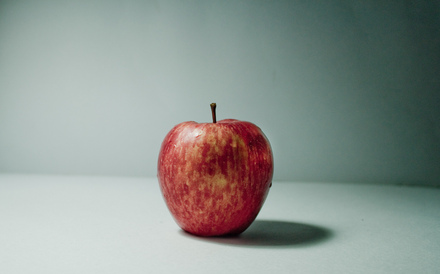
There is no part of food that is not chemical. If you eat an apple that weighs a hundred grams, you have eaten a hundred grams of chemicals.
Why are people alarmed by this idea? It’s partly that the word “chemical” has had a bad public relations run. There’s a feeling that natural “things” are good for us, but synthetic “chemicals” are bad.
This is, of course, nonsense. I work on a drug given to people suffering from the parasitic disease Bilharzia, which is extraordinarily effective. Millions of lives have been transformed. The drug is a synthetic chemical that does not occur in nature.
Humanity discovered it by making it. We should be proud. I’m not so keen on strychnine, although you find that in nature. I’d rather not.
The chemicals that make up our food are things we’ve evolved to eat so are typically good for us – that’s why they’re part of our diet.
We’ve co-evolved with the apple so that we find it tasty. It’s tasty because there are a load of chemicals in the apple that fit into things on our tongue that fire neurons to our brain in a pattern that the brain interprets as “tasty”.
We don’t like a moldy apple because there are different chemicals in there that are warning us the apple’s no longer good to eat. Our sense of taste and the apple developed in tandem. If we welcomed our alien overlords to Planet Earth with a gift basket of apples, it’s touch-and-go whether that would go down well.
Click here to read the entire article.
 Columbia news, views & reviews