
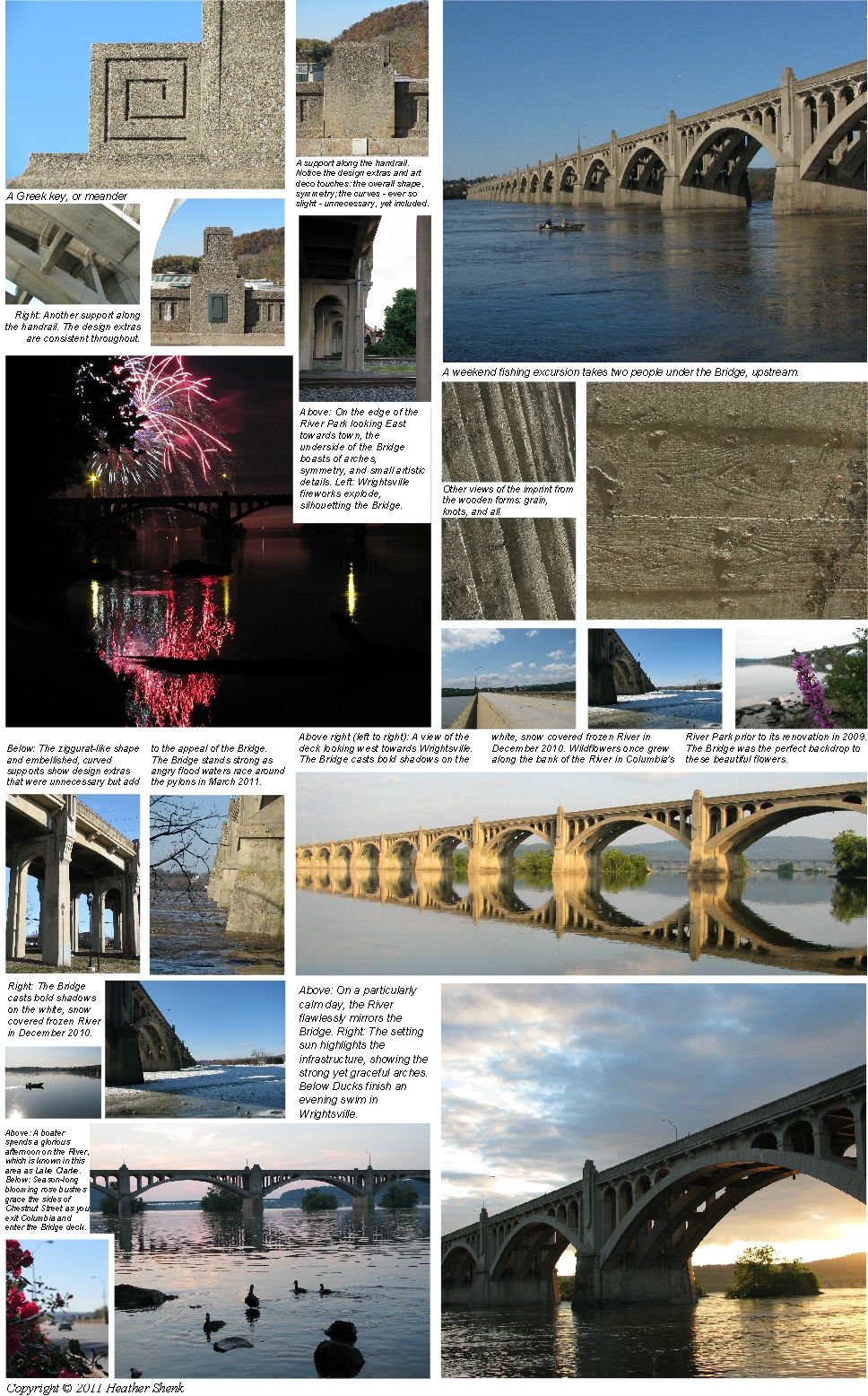
Article and photos by Heather Shenk [EDITOR’S NOTE: See a collage of Heather Shenk’s photos at the end of this article.]
Tuesday, November 11, 1930.
This was Armistice Day, a day observed by not just the United States, but by people across the world. The memories and horrors of The Great War were fresh in the minds of millions, where just 12 years prior, fighting ceased in the eleventh hour on the eleventh day of November. The Allied Army was victorious, and a year later in 1919, President Wilson proclaimed the first Armistice Day, stating, “To us in America, the reflections of Armistice Day will be filled with solemn pride in the heroism of those who died in the country’s service and with gratitude for the victory, both because of the thing from which it has freed us and because of the opportunity it has given America to show her sympathy with peace and justice in the councils of the nations.” In 1921, Armistice Day became a Federal Holiday.
In a small town in southeastern Pennsylvania, Armistice Day in 1930 was more than a two-minute observance at 11 AM to pause and reflect, as suggested by the federal government. It was more than typical gatherings and parades, which evolved from the suggested observation. No, today – in the small town of Columbia, rich with its railroads, industry, Opera house, bustling downtown business district and overflowing with people – this was a day of excitement and anticipation as well as remembrance.
Today was the day the Bridge was to be dedicated.

The History
A bridge spanning the Susquehanna from Columbia to Wrightsville was not a novel idea. The towns were founded on trans-river transportation, as the first name for the town, Wright’s Ferry, suggests. The first bridge was envisioned in 1809 and opened for service in 1814. In the winter of 1834, ice dammed the river downstream from Columbia and caused a flood that carried the bridge off of its piers.
The second bridge, which was covered, was built the same year in the location of the piers that are just north of the existing bridge. The 1834 bridge included two sets of rails, room for carriages and people, and two towing paths for the Susquehanna Canal. This bridge was burned by the townspeople of Columbia to keep the Confederate Army to crossing the River, storming Columbia, Lancaster, and possibly even Philadelphia (quite possibly the most important and overlooked event of the Civil War).
The replacement bridge was built in 1868, opened in January 1869, and included a rebuilding and strengthening of the piers. This bridge was destroyed by a horrific hurricane on September 30, 1896. The replacement bridge, erected in 21 working days (as of 1930, the quickest ever), was opened on June 8, 1897.
If anyone had any doubts as to the strength and perseverance of the people of these River towns, a look at the facts above will clearly point out that neither water, fire (by their own hands!), nor wind, can keep them from achieving the goal of having a bridge. These events not only destroyed their bridge, but also disrupted their lives. They put the pieces of both back together and forged onward.
The idea for a joint county bridge began in the early 1920s by the Chambers of Commerce and the Automobile Clubs of York and Lancaster Counties because of the congestion on the existing bridge where traffic was interrupted when trains crossed. Construction began in May of 1929, just days after a contract was awarded to the Wiley-Maxon Construction Company of Dayton, Ohio, with a bid of just under $2.5 million being accepted. That bid was the lowest of a dozen. The weather was conducive to bridge construction in the following months, and the builders were able to finish the bridge 140 days ahead of schedule. Aside from the weather, the construction company was credited for using the correct equipment and excellent plant-layout. In addition, the company would be awarded $400 per day for every day the bridge was finished ahead of schedule to keep down the interest owed to bonds that funded the bridge. All of these factors enabled the bridge to officially open to traffic at 12:12 AM on Tuesday, September 30, 1930.
It’s amazing to see just what people can do when they are motivated. The fact that in 2011, we wait for bridges that are 15 to 20 feet in length to be repaired or reconstructed for months at a time – sometimes years. Over 80 years ago, an entire bridge was constructed of solid concrete: 28 spans, 185 feet each, 20 approach spans of 48 feet each, and steel girder approach spans of 70 and 80 feet were constructed in less than 18 months. That information alone could put the casual observer in a state of awe, and that’s before one even takes a look at the visually stunning Bridge.
The Design
Driving across the Columbia-Wrightville Bridge is not an overwhelming sight, especially if you are in a passenger car and can’t see over the sides. As you enter from the York County side, you notice a sharp turn on to the deck as you leave Wrightsville. There are concrete handrails on either side, a sidewalk to the right, and tall pylons at each pier. There are hints as to the design concept – angular lines, symmetry, a slight curve here and there. All of these items are very atypical in the nondescript bridges we build today. Once you reach the Columbia side, two entrance ramps reach out like arms offering an embrace, taking you to Second Street if you wish. These ramps serve as a reminder that at one point, toll booths were located at either side of the bridge. How many times have thousands of people driven across this Bridge, oblivious to the work of art over which they have just driven?
I believe the Bridge is best viewed and appreciated from ground level. It can be seen from Front Street in Wrightsville, Commerce Street, Front Street and Bridge Street in Columbia. I believe the best view is from Columbia’s River Park. There you see it as it spans the River, its trio of glorious arches attached to stalwart pylons going westward to Wrightsville.
Included in the Bridge Dedication Program from 1930 is a page penned by James B. Long, the consulting engineer for the Bridge. After a brief description of the Bridge, he described why this particular type of construction was selected. The reasons:
- The type of rock needed for construction was abundant in the area.
- The span lengths were made to be as close as possible to the existing Pennsylvania Railroad Bridge to keep from blocking the river any more than necessary.
- Arches were selected because they are the only type of reinforced concrete construction suitable for the length of the spans.
- Three arches were used instead of one solid arch because the construction was more economical.
- The length of the deck girders was dictated by the space necessary for the railroad that runs under the bridge on each shore, and finally,
- The arches are the same lengths so the same the same forms could be used.
Of interest to the casual observer is that no mention is given in this description of the decorative “extras” included in the Bridge design. Yes, it was obviously built from a practical and frugal standpoint, but what about the artistic touches that grace this mile-and-a-quarter long poured concrete masterpiece?
For instance, one description mentions that on each pylon support is a pair of Greek key motifs. These motifs are also called meanders, and were named for the River Meander in Turkey, which is mentioned in Homer’s The Iliad. While this design flair was very contemporary in the late-20s, I can’t help but wonder if the designer didn’t choose a motif that is named for a river on purpose. On the side of each pylon is a ziggurat-like shape that became very popular in art deco-inspired architecture due to the influence of Egyptian style. King Tut’s tomb had just been discovered, so Egyptian style was the rage.
There are other arches and decorative supports as well. Even these supports are necessary for strength and rigidity, they didn’t have to be designed with such artistry. Taking a glance at pictures of buildings from the art-deco period like The Old Mutual Building in Capetown, South Africa, the Northwestern Bell Building in Minneapolis, Minnesota, and The Anzac War Memorial in Sydney, Australia one can see that the Bridge has many of these design elements. Although the Bridge design is based in practicality, the inclusion of these unnecessary decorations adds to the grandiose spectacle of the Columbia-Wrightsville Bridge.
On Armistice Day, Tuesday, November 11, 1930, this phenomenal engineering and design masterpiece was dedicated. The day was likely filled with fanfare, excitement. Pennsylvania Governor John S. Fisher was among invited guests that were present for the parade, Dr. Henry H. Appel’s Memorial Address, and the twin silk ribbon cutting ceremony on each side of the Bridge that day. A week or so prior, when Governor Fisher wrote his letter of acceptance to the invitation to come to the ceremony, he stated,
“I heartily commend the patriotic spirit that prompted the dedication of the Columbia-Wrightsville Bridge as a memorial to the citizens who have offered themselves in military service of the nation. So much of historical interest and value attaches to the viscidity where the bridge is located and the bridge itself is such a noble example of modern engineering and building skill as to make it a worthy memorial to the men and women who did military duty in all the wars in which we have been engaged since colonial times.”
This “noble example” is still here – still current, still making a way for people to easily traverse the River, still standing tall and strong. It is still a combination of rare beauty and uncompromising strength, despite harsh elements it has weathered through the years.
In my opinion, the Bridge is a perfect symbol for the town of Columbia and its people.
Heather Shenk, a native of Dundalk, Maryland, has lived in Columbia for about two years. She enjoys learning about the history of the town and spends lots of time taking pictures in the town and surrounding areas.
[EDITOR’S NOTE: If you would like to have copies of the above photos, Ms. Shenk has advised us that copies may be purchased. Email Ms. Shenk at 17512@mail.dom for pricing and ordering information.]
 Columbia news, views & reviews