“Modern hearing aids are smaller than ever, self adjusting and capable of connecting with other wireless devices. A completely invisible extended-wear option is now a reality for those with mild to moderate hearing loss. What will work for an individual depends on their hearing loss, expectations and lifestyle. “
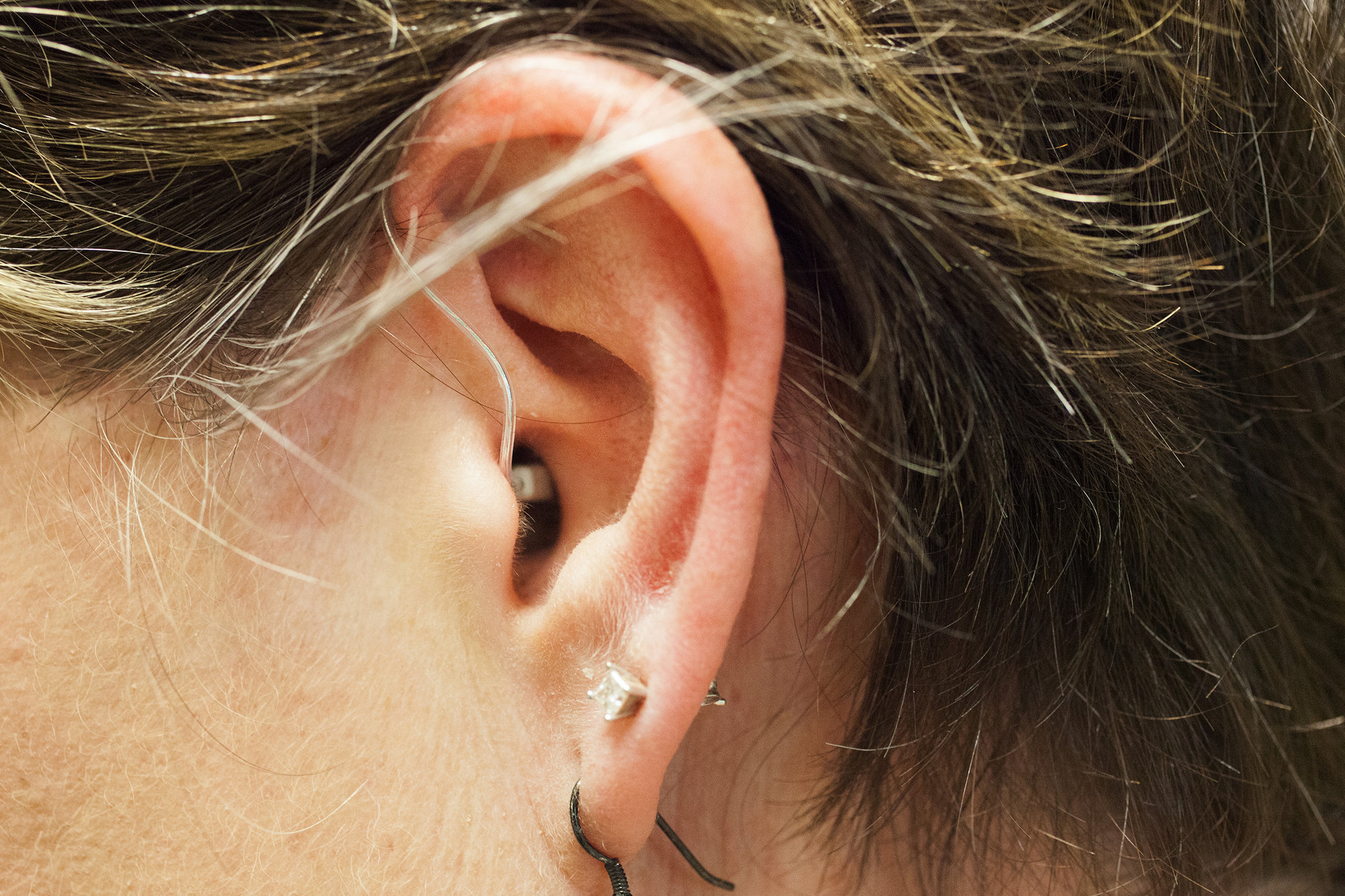
Lisa Davis, receptionist at Duncan Nulph Hearing Associates, models an Oticon Agil Pro hearing aid. The case sits behind the ear with a thin piece of tubing running to the ear piece in the canal. – (Photo, Paul Chapin, The Patriot-News)
“It seems like electronic devices are constantly getting smaller and doing more. Hearing aids are no exception.
“Until the 1990s, hearing devices basically amplified sounds with little discrimination. Newer digital technology has allowed each device to be programmed for an individual’s hearing loss and for a variety of environments.
“‘In the earlier days of digital, hearing aids offered programs for different situations,’ said Dr. Kristen Duncan, audiologist at Duncan Nulph Hearing Associates in Lower Allen Twp. With a touch of a button, people could change the program on their hearing aid to match the environment they were in.
“‘Nowadays, hearing aids are constantly monitoring the environment and changing accordingly,’ she said. Manually changing programs is no longer a necessity, though it is still an option.
“When two hearing devices are worn, more advanced units work together. For example, if you are in a restaurant and there is a loud party behind you, the devices work to manage the noise by adjusting the microphones and volumes to suit the hearing loss of the user and the situation. “Between the two hearing aids, they will configure the microphones to reduce that noise and maintain audibility at the table,” Duncan explained.
“Modern hearing aids are smaller than ever, self adjusting and capable of connecting with other wireless devices. A completely invisible extended-wear option is now a reality for those with mild to moderate hearing loss. What will work for an individual depends on their hearing loss, expectations and lifestyle.
“Wireless technology
“Having wireless technology has shaped communication for just about everyone, but for those with hearing loss, it provides the opportunity to hear better by transmitting sound into hearing devices.
“Every manufacturer’s product is slightly different, but typically a small streaming box is worn around the neck. It connects up to eight devices and streams the sound directly to the hearing instruments using Bluetooth technology. Users can hear a connected phone ring directly in the ear and hear the caller in both hearing devices.
“Audio from TVs, microphones, computers, MP3 players, tablets and video games can be streamed directly to hearing aids as well.
To read this Harrisburg Patriot-News article in its entirety, click here.
 Columbia news, views & reviews