Road trip, continued.
Descending from mountains into the great central valley, you cannot help but think about the writings of Steinbeck (even though his writings focused on the SalinasValley). These quotes (below) are taken from the Grapes of Wrath and are stark reminders of the changes that have not yet taken place.
- “I know this… a man got to do what he got to do.”
- “How can you frighten a man whose hunger is not only in his own cramped stomach but in the wretched bellies of his children? You can’t scare him–he has known a fear beyond every other.”
- “Whenever they’s a fight so hungry people can eat, I’ll be there. Whenever they’s a cop beatin’ up a guy, I’ll be there… I’ll be in the way guys yell when they’re mad an’-I’ll be in the way kids laugh when they’re hungry an’ they know supper’s ready. An’ when our folks eat the stuff they raise an’ live in the houses they build-why, I’ll be there.”

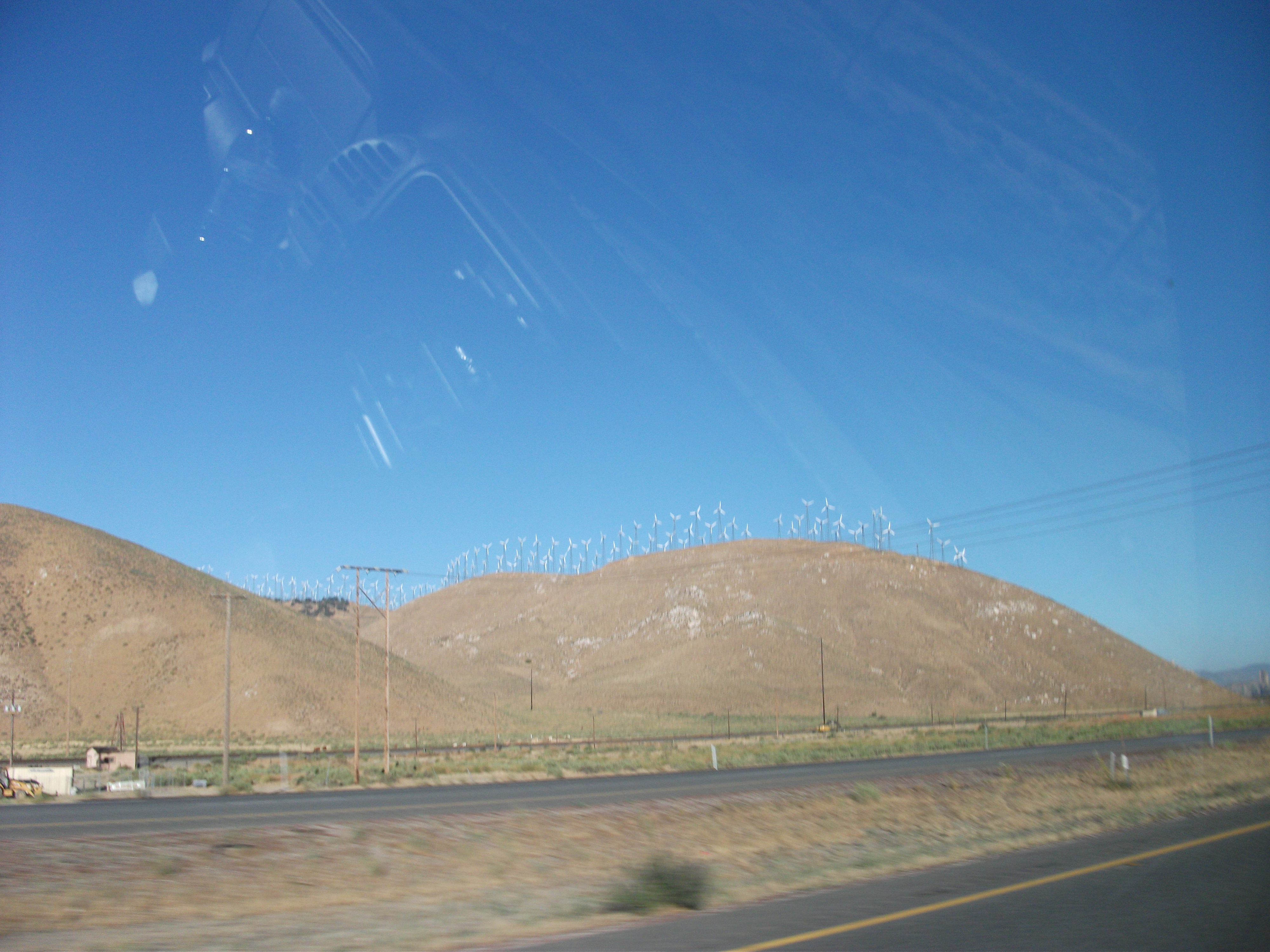
The awesome spectacle of brilliant green fields is such a stark change from the hundreds of miles of brown hills we have been driving through. This is the “fruit, nut and vegetable” basket of the United States. Driving along through the valley, passing by the “largely-unfamiliar-to-most” towns and cities of Bakersfield, Delano, Famoso, McFarland, Pixley, Tulare, Visalia, Kingsburg, Fresno, Madera, Chowchilla, Merced, Turlock, Modesto, Salida, Lathrop, you see the hundreds and hundreds of miles of cropland filled with the bounty that will be in stores across the US and the globe.

The lives of the growers of the great central valley are totally dependent on the lives of the migrant workers families we see laboring in the groves and fields. We see them, the families, at the Flying J putting gas into their older vehicles. The NPR report “California’s Central Valley,” says, “In 1949, historian and journalist Carey McWilliams wrote, ‘The farm labor problem is the cancer which lies beneath the beauty, richness, and fertility’ of the Central Valley. More than 50 years later, McWilliams would probably come to the same conclusion. By the most conservative estimates, 50 percent of the valley’s farm laborers are illegal immigrants — other estimates run as high as 90 percent. Despite farm labor laws, workers are still subject to sub-minimum wages and dangerous working conditions. Whole towns are virtual labor camps aptly described as ‘California’s Appalachia.’ The region is home to a multi-generational underclass of low-skilled, poorly educated workers and their families. But unlike immigrants of the past, these workers show no sign of being absorbed into an economic track that will improve their lives.”
The Central Valley Business Journal article “Exports key driving factor Central Valley economy” says ‘Central Valley exports are shipped to more than 100 countries from Afghanistan to Zimbabwe.
“‘It’s difficult to tell exactly how the global economy may have affected exports because the markets remain huge for cherries, shelled and in-shell walnuts and almonds,’ said Gary Caseri, Stanislaus County agricultural commissioner.
“Over the past half-decade, Central Valley agricultural exports have remained “fairly constant” he said, among the ‘Top Ten” export commodities: almonds (shelled), walnuts (in-shell), walnuts (shelled), almonds (in-shell), dried grapes (a crush byproduct), tomatoes, nursery stock, lentil beans and dry beans.”
NOTE: Tomorrow look for a collection of pictures entitled “Windshield vistas” from the 99 cent bucket list listing “spend a night in a new town.”
 Columbia news, views & reviews