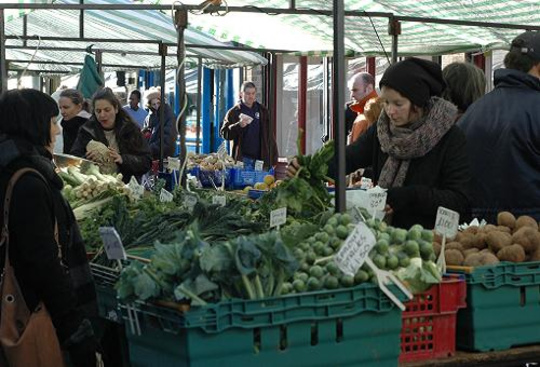
 A growing distrust of food has driven the growth of the organics market. Aiden Brooks
“Across the world, outbreaks of food-borne illness, contamination and environmental scares have generated a lot of media attention and plenty of fear around food safety. Think of the recent E. coli outbreaks, the Fukushima radiation leaks, health concerns about pollutants and the use of pesticides.
“The resulting distrust of the food supply has driven consumers to seek what they believe is the safest, cleanest, most sustainable and nutritious food choices: organics. And this is the type of food you would want to feed those you love, your family, your baby and yourself.
“The truth is that neither organic nor conventional food is better or worse than the other. But as the demand for organic food increases, so does the myth that it must have higher nutrient values.
“Whether you eat organic or non-organic produce is up to you. But factors to consider are cost, nutrition, taste and environment impact.
Cost
“Organic food does cost more than other food – sometimes a lot more. This is due to the extra costs to produce organic food, the need for more labour and, often, smaller crop sizes.
“Around 86% of Australians don’t eat the recommended five serves of vegetables daily and 46% don’t eat the recommended two serves of fruit a day.
“Cost can be a major barrier to increasing your fruit and vegetable intake. But it’s better to eat twice as much non-organic pumpkin, carrots, zucchinis and beans than half the amount of organic ones.
“Eating too few servings of fruit and vegetables is estimated to account for 1.4% of the total burden of disease in Australia, while greater consumption predicts better health and protects against chronic conditions such as high blood pressure, high cholesterol and heart disease.
“In Australia, 11% of all cancers are thought to be related to inadequate fruit and vegetable consumption.
Nutrition
“In 2009, the prestigious American Journal of Clinical Nutrition published a systematic review by Dangour et al of the best available evidence evaluating research on the nutritional quality of organic foods.
“The researchers searched more than 50,000 articles to locate 162 studies comparing organic and conventional crops and livestock. They found that overall, conventional crops were higher in nitrogen (due to nitrogen fertilisers) and organic crops were higher in phosphorous (due to phosphorous fertilisers) and what they called ‘titratable acidity’ which is due to ripeness at harvesting.
“But there were no differences in other vitamins or minerals analysed, including vitamin C, phenolic compounds, magnesium, potassium, calcium, zinc, copper.
“One major shortcoming of the studies, however, was that half failed to indicate what body had certified the crop as organic. The conclusion was that organic and conventional crops were comparable.
Taste
“A study published in 2007 by Zhao et al in the Journal of Food Science took the same varieties of lettuce, spinach, rocket, mustard greens, tomatoes, cucumber and onions. They grew two crops alongside each other in separate plots: one was grown organically and the other using conventional agricultural techniques.
“They then asked consumers to evaluate the taste and how much they liked the two types. No differences could be detected, except for a preference or the conventional tomatoes that were slightly riper.
Environmental Impact
“The environment is the main winner when it comes to organic farming. This is because synthetic pesticides and herbicides are not used, and crops are commonly rotated, so biodiversity is promoted.
“The confusion around organics comes from mixing the issues of nutrition, taste, safety, and environment into the same argument.

Neither organic nor conventional food is nutritionally any better or worse for you. Smaku
Eating Enough Fruits and Vegetables
“The best way to improve the nutrients you get from vegetables and fruit is to eat more of them. Go for those that are in season and visit a growers market to discover those that are grown close to home.
“You should aim to eat five serves of vegetables and two serves of fruit each day. To continue reading this article from The Conversation, click here.
 Columbia news, views & reviews