Yesterday, LancasterOnLine carried the news story about the resignation of Columbia Borough’s tax collector. Today it is the lead article on page B-1, the lead local news page of the Lancaster Intelligencer Journal/New Era.
Because citizens elect “public servants” to act in their behalf to orchestrate government functions in accordance with established laws and codes, many citizens do not make time to become familiar with the laws and codes. They trust those in legislative and executive roles to do that. In case you want to become more familiar with the roles of governing bodies and tax collectors in Pennsylvania municipalities, click on the picture of the Tax Collector’s Manual below.
On March 8, Columbia news, views & reviews carried this news note:
“Here’s something curious … Yesterday, a citizen, who happens to be a property owner and tax payer, mentioned to us that when the citizen tried to pay his property tax to the borough’s tax collector, the tax collector refused to accept the payment. When the citizen asked why, the citizen was told there was an issue with the borough centering on the substantiation and codification of collecting “certain fees.” According to the borough code, “§ 194-30. Definitions. The following words and phrases, when used in this article, shall have the meanings ascribed to them in this section, except where the context or language clearly indicates or requires a different meaning: COLLECTOR – The person, public employee or private agency designated by the political subdivision to collect and administer the tax herein imposed.” The borough Website also addresses where property owners may pay taxes at the “Resident Information” page. We scanned through the borough codes (and you may want to as well) to find references about taxing fees but were unsuccessful in finding any reference to the situation. Here’s the Lancaster County tax collectors listing. Here’s a listing from a private-source information provider; interestingly, it appears to have better contact information for councilors and some borough personnel than the borough’s Website does. [NOTE: Want more information; here’s the link to The Pennsylvania Tax Collector’s Manual.]
According to the LancasterOnLinearticle, “Borough officials, however, still need to learn the tax-collection system and aren’t expected to begin collecting local and county property taxes until April 2.”
Citizens may wonder why borough officials only now have to learn the tax collection system?
It is within the purview of the council establish codes and operating guidance for tax collection. “In boroughs … , the compensation for the tax collector is set independently by each taxing district. Borough council …, fix(es) the compensation in the form of a salary, wages or a commission, with the total compensation not to exceed 5 percent of the amount of taxes collected for each unit … . In fixing tax collector compensation, a taxing district shall provide a method whereby a tax collector will receive additional remuneration for work related to collection efforts with regard to taxes levied and assessed upon a duplicate issued after an interim assessment. The additional compensation required may be based on the issuance of an interim bill or calculated in any other manner permitted by this act.” (Page 10, Tax Collector’s Manual)
In the LancasterOnLine article, “Mary Wickenheiser, the vice president of borough council, said the lack of a borough ordinance authorizing such a tax certification fee came to light after a financial institution raised questions about its existence.”
Citizens may wonder why borough officials only now have to learn that a borough ordinance was needed?
“In a 1988 decision, the Common wealth Court ruled a tax collector had violated the State Ethics Act by charging a $10 fee for tax certifications.11 The decision upheld a ruling of the Ethics Commission. In this case charging the fee had been a long-standing practice of the incumbent and former tax collectors, but had not been authorized by a municipal ordinance. In the absence of statutory authorization, certification fees for tax collectors may be established by enactment of an ordinance by the municipal governing body. Because tax collectors are municipal officers, the municipality has power to establish fees for services of its officers. The fee established should be reason able. A good guide line is the $5 fee established for lien certificates issued by county tax claim bureaus under the Real Estate Tax Sale Law.” (Page 21, Tax Collector’s Manual)
Citizens may wonder who’s driving the boat?
Or as one citizen was quoted in the newspaper and Lancaster OnLine article: “‘It’s a flying circus here.’ said Donald Proper.”
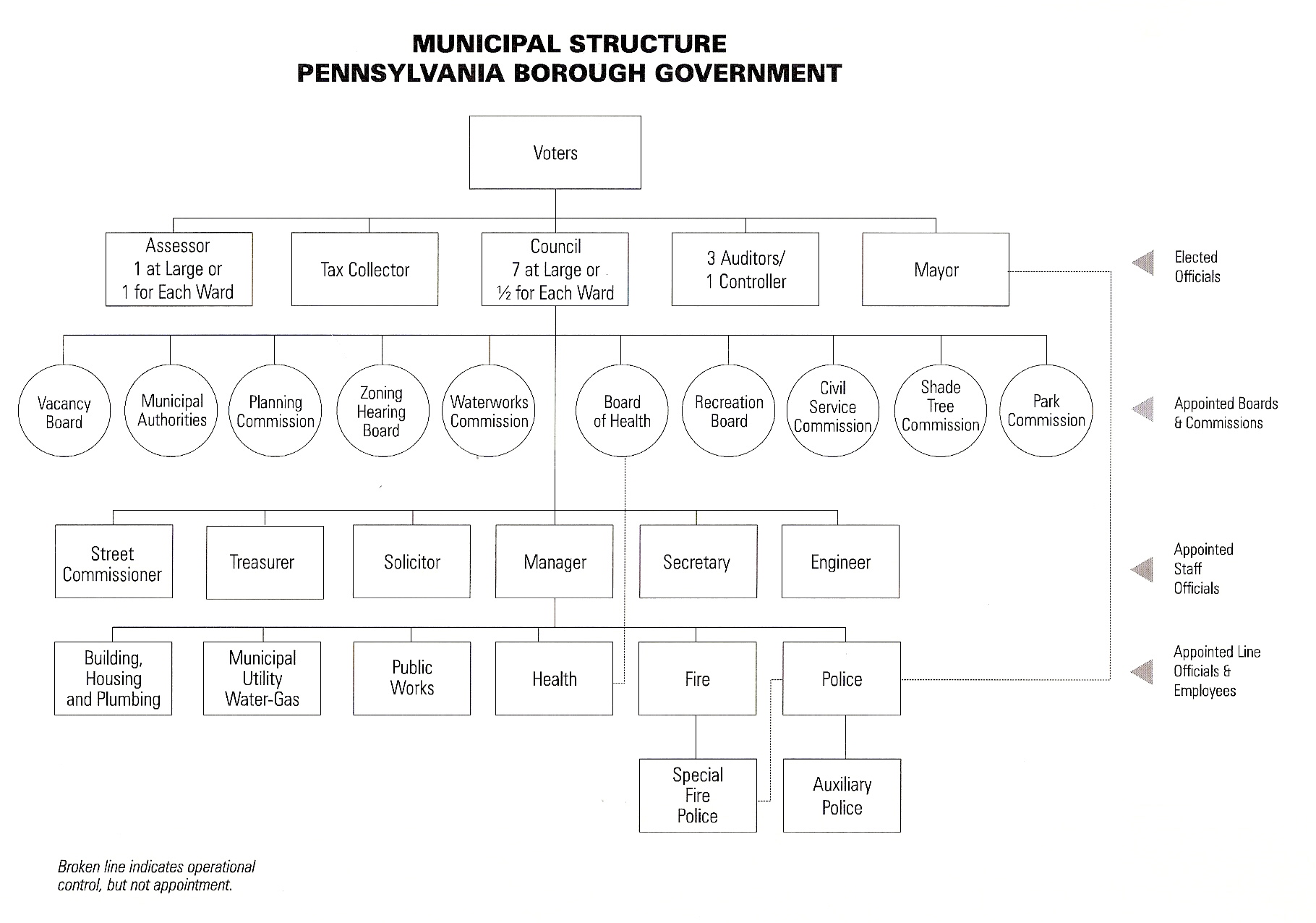
Here’s the crew alignment for the boat; here’s the governmental structure for boroughs in Pennsylvania:
 Columbia news, views & reviews
Obviously, the boat is sinking. Thanks for providing this information.